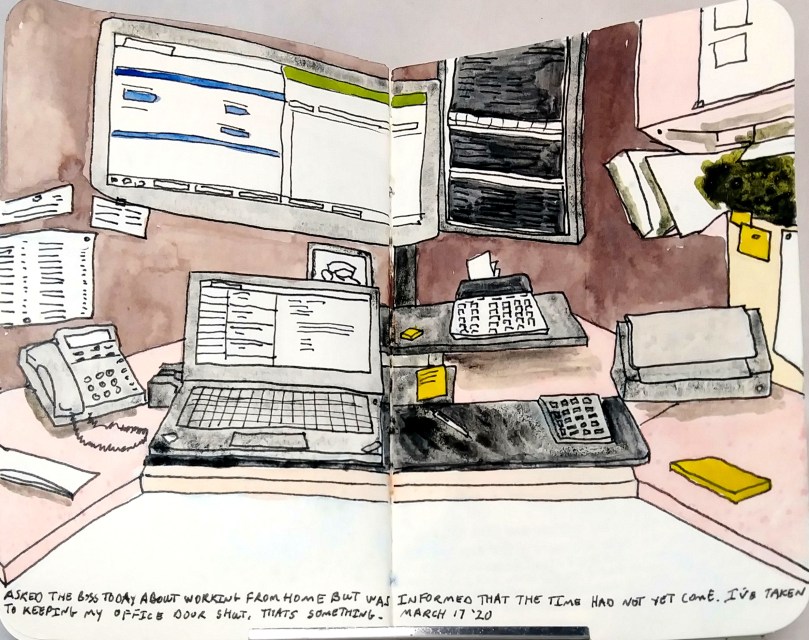
I don’t think I really mind the gutter. It doesn’t complicate drawing very much, but that’s a benefit of not being terribly critical as far as how anything comes out.
I don’t think I really mind the gutter. It doesn’t complicate drawing very much, but that’s a benefit of not being terribly critical as far as how anything comes out.
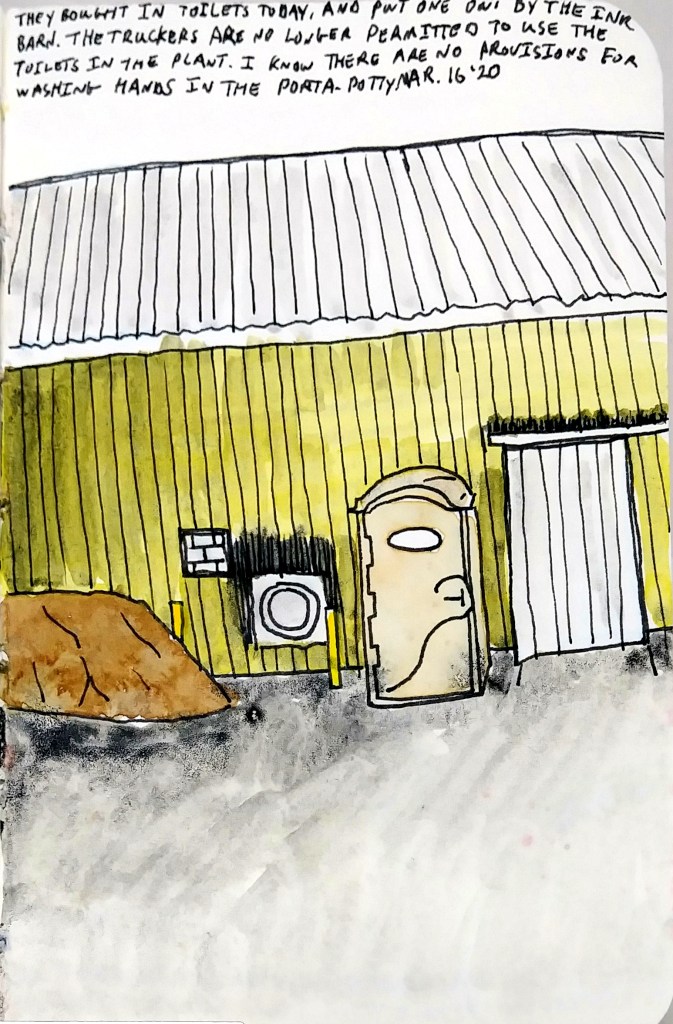
The population of the state of New York is not distributed evenly. Less than half of it is in New York City. I’m part of the rest of it. Here’s what the Covid-19 pandemic has been like.
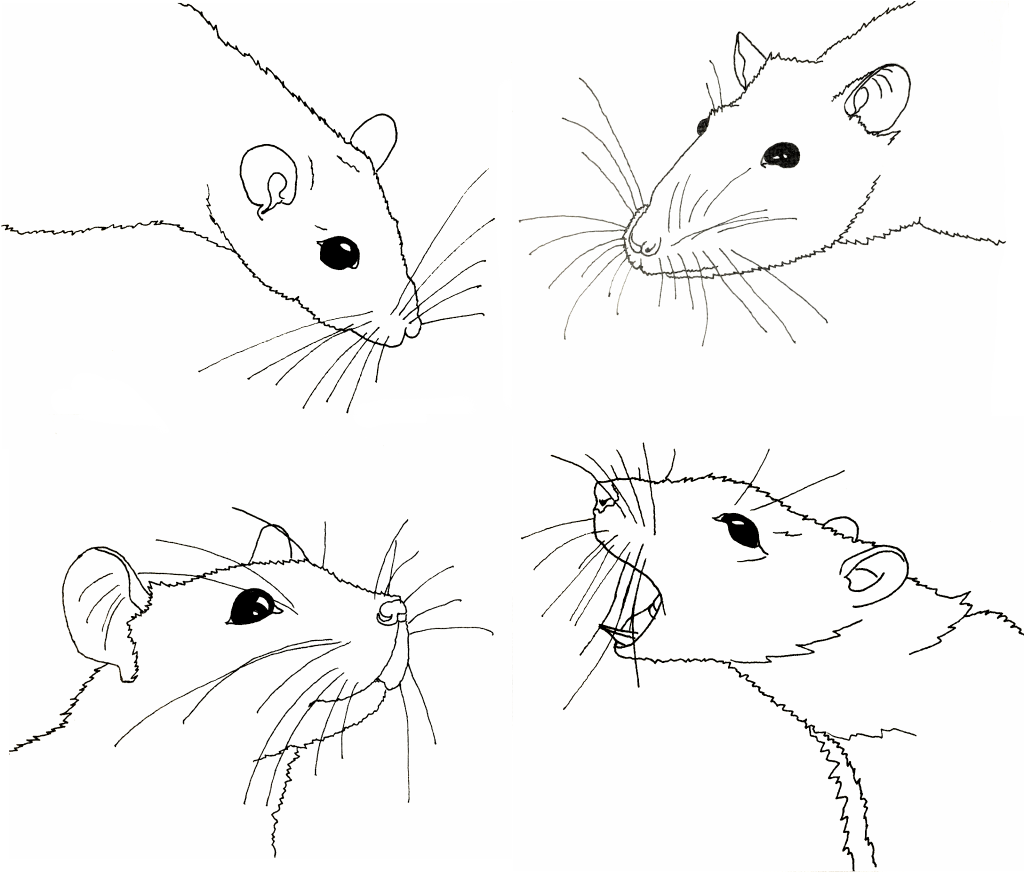
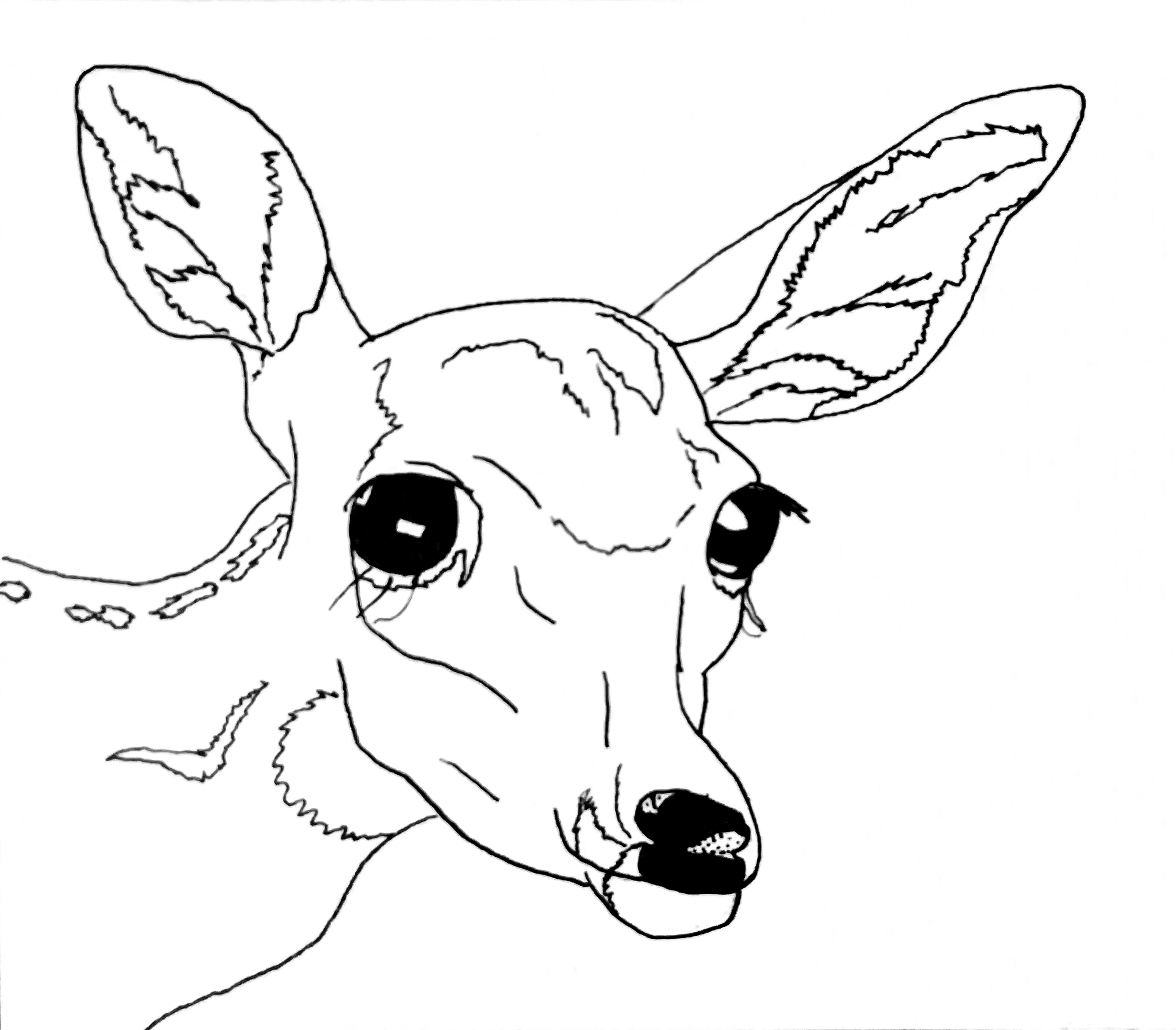
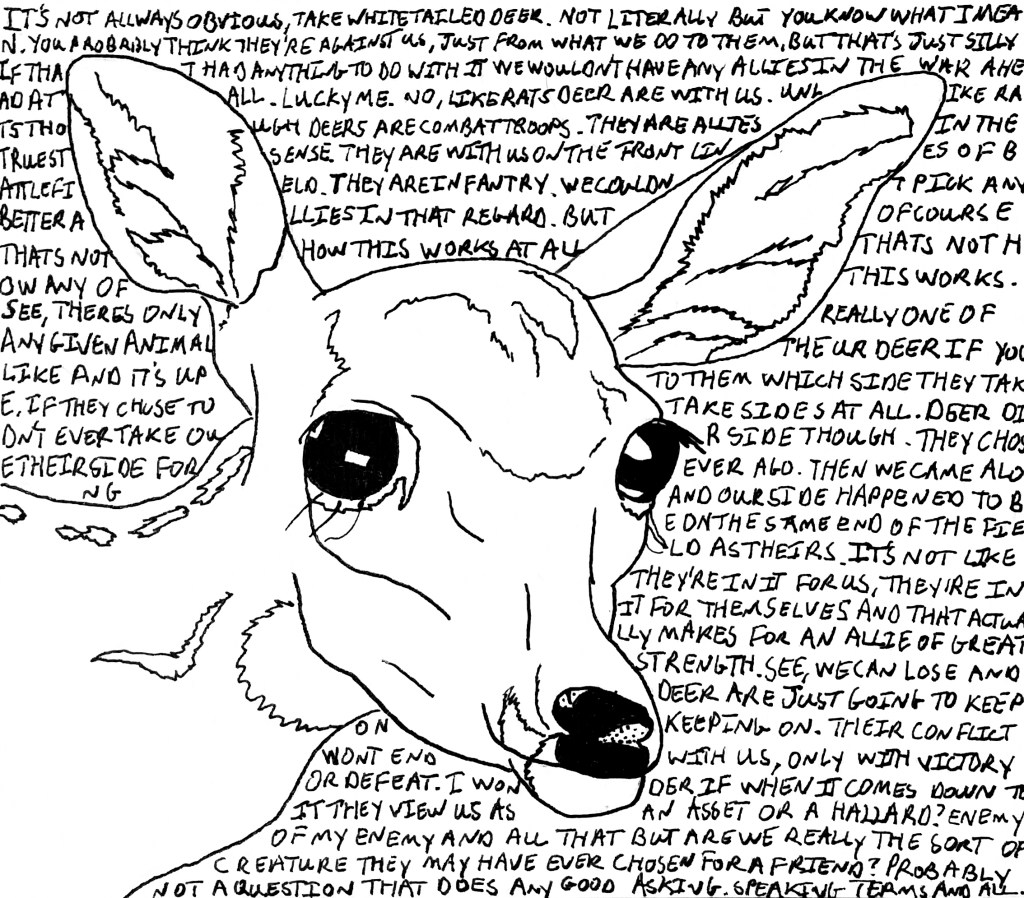
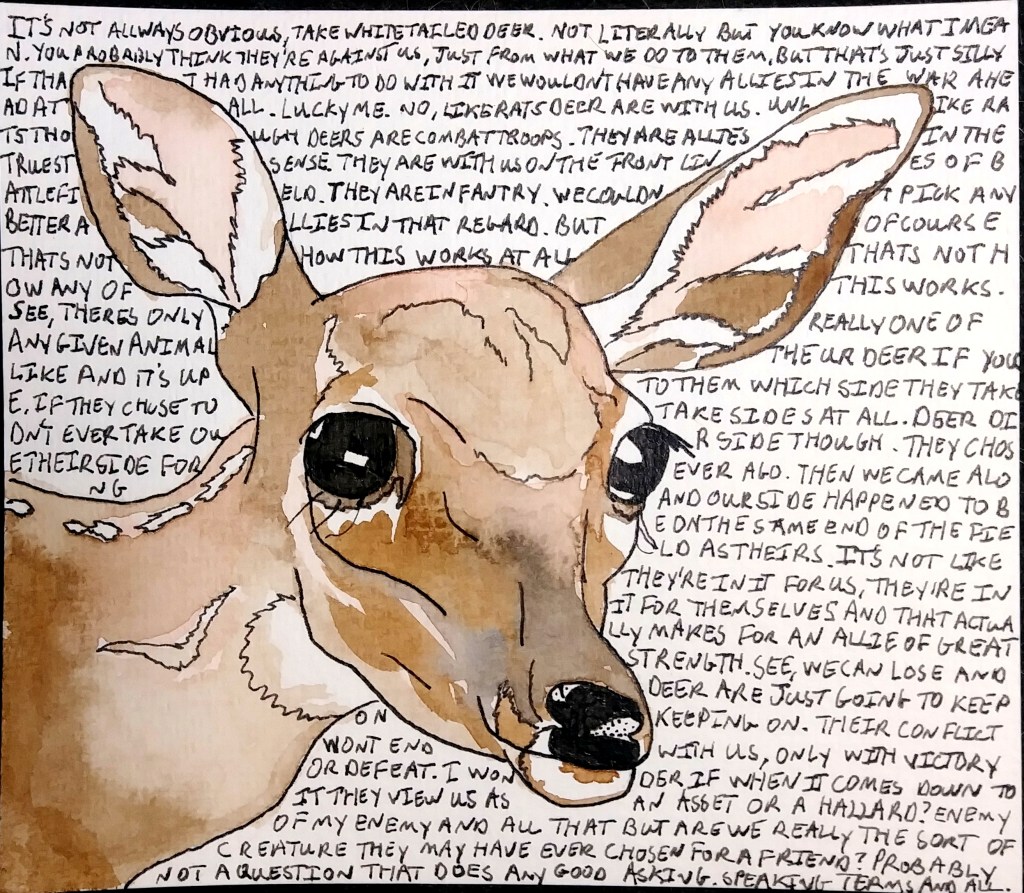
I didn’t realize for a long time, like way longer than your might think, that not everyone heard voices. I mean, you’d think I would have picked up on that. Like, I knew that I could hear mine, and other people couldn’t, but it never occurred to me that other people didn’t have their own that they could hear and I couldn’t.
I don’t talk about my voices. I mean, I admit to them, but I don’t talk about what they say. That’s over now. I get very upset by what I hear which is weird ‘cause I don’t think other people would be upset by hearing the same things.
One voice I hear pretty clearly. It’s generally asking me questions. It asks me about horses fairly regularly. “What about the horses?” This is very annoying. It’s not very upsetting. The other voice is not very clear. It says things like “no” and my name a lot. It says a lot of other things I don’t really catch, like I hear it but not quite. Like, I want to ask it to repeat itself but I think that’s the idea, so I don’t.
The second voice is very upsetting. It’s distracting, it makes me feel panicky and raises my heart rate to where I can feel it so I get to worrying if I’m going to have problems with my heart again which makes me more upset.


So urban sketching is a thing. It’s a thing I want to do which for me means reading way way too much about it before actually giving it a shot. As a result I’ve got a stupid number of books about it, here’s one.
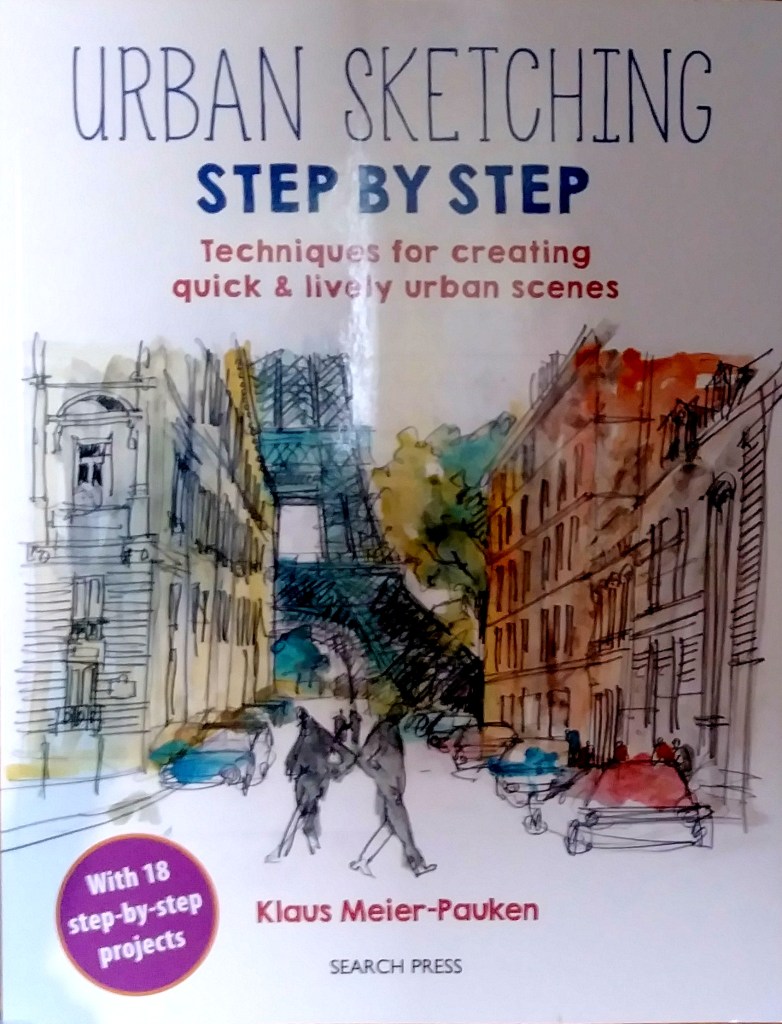
Urban Sketching Step by Step subtitle: Techniques for Creating Quick & Lively Urban Scenes is a 96 page work written and illustrated by Klaus Meier-Pauken. Klaus is a former architect and urban planner who is now a working artist and professor. I like that I’m getting a book from a person who’s trying to teach me something when that person is actually a teacher, it makes me feel like this book is going to have some solid structure as far as getting me from point A to B.
First impressions on flipping through the book are good. It’s good size, like A4 so things look a size that they could be drawn if you wanted to practice by copying some. There’s a lot of illustration but a fair mix of text as well. The drawings have a real sketchy quality that I love (clean lines and stuff can be nice too, but learning should be messy so I’m glad it looks a bit less neat). There’s a mix of pencil and pen for the line work and it looks like colors come from everything from pencils to pastels and watercolor. There also seems to be progressional drawings as well and they aren’t the stereotypical draw a line, draw a circle, finish drawing the horse type which is nice. It’s a little infuriating when someone trying to teach you something wont show you how to get from blank page to finished sketch so no worries on that front.
Reading the book it’s obvious it’s a translation but it’s still very readable. Klaus takes some firm stances early on as far as the paper you should choose goes but it’s not off-putting. I like that he doesn’t seem to feel you must use a sketchbook; that’s probably just ‘cause I like loose sheets.
There’s solid information about the usual things, composition and perspective, as wells as how to pick a view that’s going to be rewarding to draw. I love that he touches on the one thing about perspective that always seems to get left out, where people will be in relation to the horizon. I feel like everyone gets the lines stretching to a vanishing point right away so it bugs me when there’s no mention of how to position things that don’t follow those same rules.
All in all I say this is a pretty great book. Especially if, like me, you’re ready to start but haven’t got a clue where to start
So the inability to sleep has resulted in a run-on-sentence of a zine that you can have. It’s about the importance of rules and how sometimes learning the right one is all that anyone’s waiting for.
As always, feel free to take it and do whatever.

You should absolutely buy a Kodak Duaflex II with a variable focus Kodar lens. Here’s why:
Yeah so I broke it down, onto the specifics.
6×6 is a great format cause you can contact print it for wallet size photos and a 6×6 enlarger is way cheaper than other medium formats. Heck, most 35mm enlargers have a negative carrier for 6×6 or will work fine with a hand made cardboard carrier. Sure, it’s 6×6 with 620 rather than 120 but 620 spools are easy to find or you can sand down the ends of a 120 spool.
It’s a pretty compact camera. Smaller than a normal TLR and because of the form a bit more packable than a Holga or Diana. Yeah, it’s bulkier than a folder, like any of the million 6×6 rangefinder or viewfinder cameras, but it’s a fraction of the weight. It’s around the size of a coffee mug.
It’s a thick plastic and metal camera. I bet every one out there has been knocked around and dropped a dozen or more times. Don’t go out of your way to beat it up but in the normal run of things the cameras just don’t break and they are almost too simple to fail and need work. This is a toss in a bag, chuck in the glove box camera.
It’s a Kodak, with a Kodak lens. It’s not an award winner but it works and isn’t trash. Some people call it a toy camera, it’s not a pro camera by any means but every family reunion in the 50’s probably had one of these around. If you get one of the variable focus models it’s got some different apertures too. You have some flexibility there and it won’t ever be too confusing. You can pretty much get some kind of negative every time.
Unlike most other cameras in it’s class, basically box cameras, the variable focus models (and all the models above II) have double exposure prevention. If you don’t wind it, no clicky clicky, unless you specifically press the override. This is a great feature for forgetful people or anyone used to 35mm or any fancier cameras. And it’s not some fidley how to circumvent double exposure protection, it’s a little lever, it was designed that way.
The flash units aren’t hard to find, and unlike later models that used a gun style flash that worked with a variety of Kodak cameras the flash was specifically for the Duaflex. Even with the flash attached it’s still decently compact. Not only that but the reflector is actual metal. Most of the later gun style ones used a plastic reflector that just doesn’t stand up to abuse the way a metal one does.
The waist level finder is a thing of beauty. This is the LCD display of yesteryear. The one on the Duaflex is a lens rather than a ground glass so as long as your lined up it works in low light about as well as in normal light. The simple single-element lens in front of it means it’s bright bright bright. If you want ground glass instead, because of how the cameras made you can replace it with a ground glass easily.
Kodak was always good about putting a tripod socket on their cameras and the Duaflex is no exception. Some people never seem to use a tripod but it’s always better to have a socket than not. With that and the B shutter setting you got night work and indoor photography covered.
This is not a costly camera. You’re looking at $5-15 for this, max. Even on a site like eBay the thing is going cheap. I picked one up with a flash and the nearly impossible to find Kodak No.6A close up (portrait) attachment, and the original manuals for the flash everything, for all of $10. This camera is always available and always in working order.
T’was the night before x-mas and-nope, #fuckthisshit we’re not doing poems don’t think about it!
Look, I get that this hellsite is anything but, the holiday spirit’s stuck in a rut.
It’s the night before twitmas So ready yourself for tweets from twats who can’t help themselves.
Bae caught me sleeping with elf on his shelf in this influencer nightmare of paid-add-self-help.
My tweets are all crafted with care and precision the better to garner public recognition.
Give me likes and retweet’s that I care for deeply, but shut up about Rowling, the net mutters weakly.
The truth is I am as important as shit, and this little holiday, who cares about it?
But do remember that shit is just waste, so leave this in the toilet, and flush it post-haste.
There’s a few devices out there that let you draw on paper and capture that into a digital format. XP-Pen just came out with one, Wacom has had a few offerings over the years, this is about one of them. These days a brand new Wacom Bamboo Spark runs about $25 on Amazon, provide you get the one with a snap fit for the iPad air 2. It does require using their pen, which is a bummer but they all seem to require using their pen, and it’s always a ballpoint. Still, pretty fun. Wacom even let’s you export the sketch as a video.
 Uncredited Work