There’s this weird thing about painting. I still notice it. Not so much anymore, but still. It’s waiting. Painting is like photography is for me that way. See when I draw and can just start drawing and stop when I’m done. If I’m painting I have to stop and wait. Paint this bit, now it needs to rest, dry at least a little. That can be weird. It helps to have something to do while I wait. Something with sound and a need for real focus.
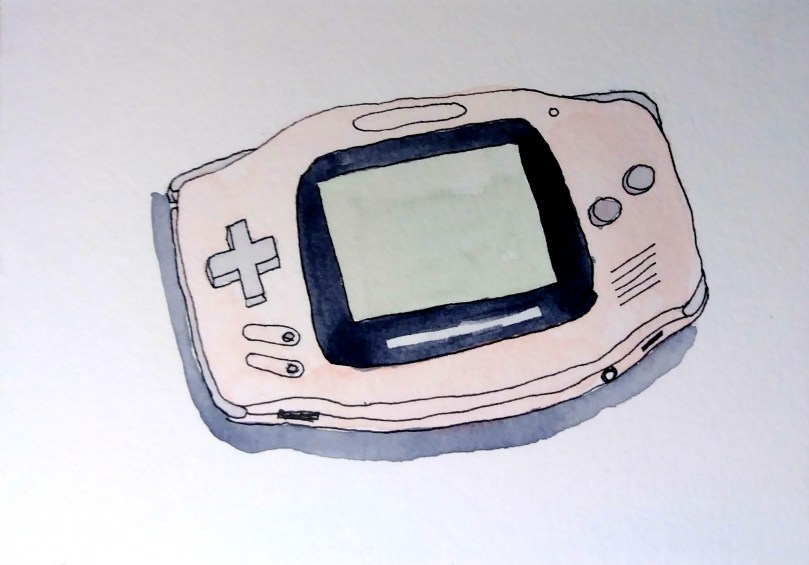
My Gameboy Advance helps with that. Mindless but urgent games are the most useful, Tetris or Dr. Mario, or Doom, something like that. Where you turn yourself off and try not to die. It’s good for the voices. The way painting and drawing are too.
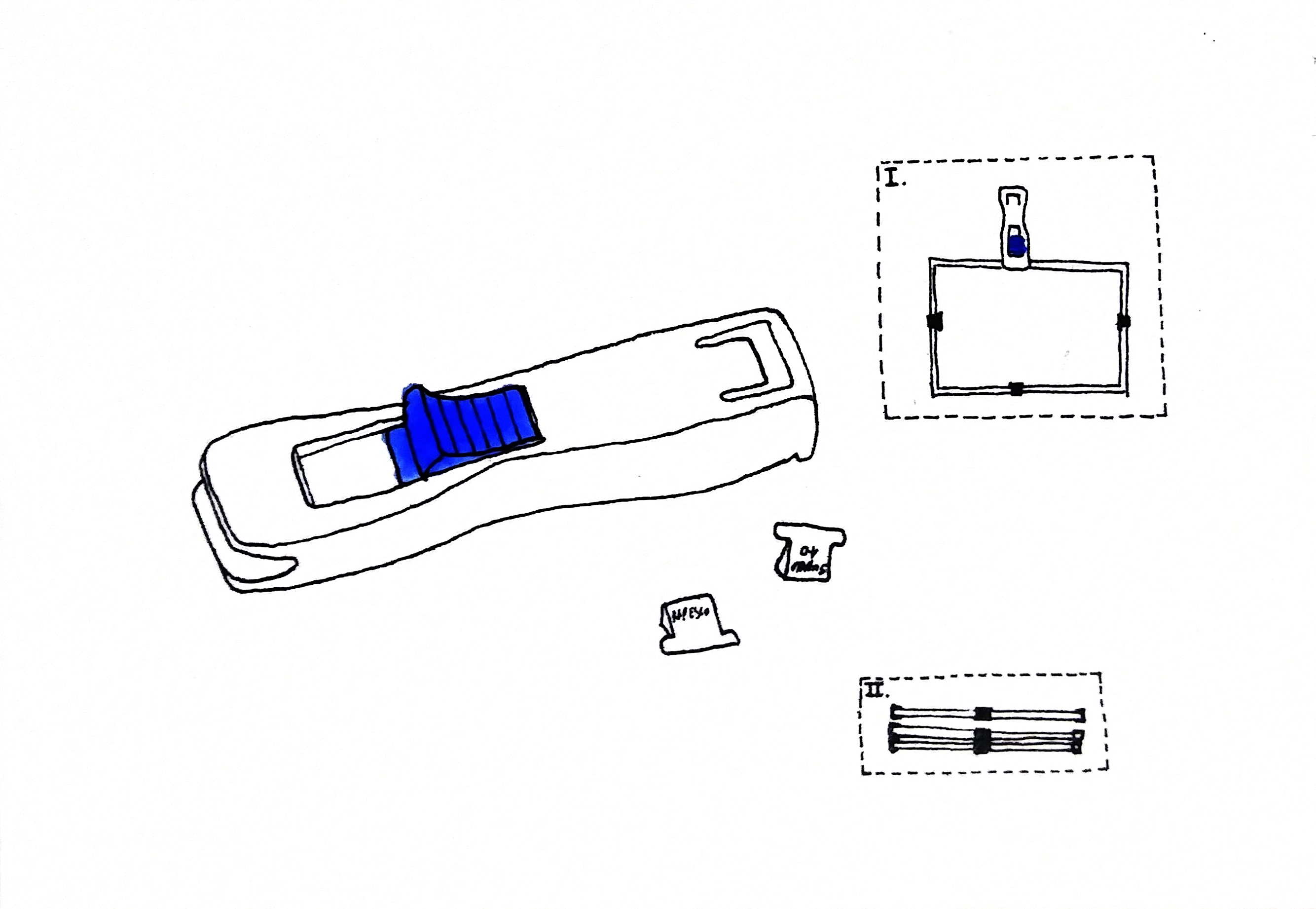
The best art supply, that isn’t an art supply is the Rapseco Supaclip 40. Why is that? ‘Cause it’s a binder clip but without those little arms that get in the way. Those arms can be nice, and yeah you can pinch them and take them off if they are in your way, but I lose them when I do that. So I don’t have to fold them down and have them cover the paper I want to clip to a panel and I don’t have to fold them back and have them hang off the edges getting in my way. I can just use Supaclips.
That means I can clip paper to a panel and use it in anything that is built to hold a panel, like a pochade box. And they add just a hair of a sand-off so I can stack painted panels. I freaking love Rapesco Supaclips. The size 40 are perfect for eighth inch panels.
I might have a problem with watercolor pallets. I want to find one that’s perfect, that has everything I want, and nothing I don’t. That means I have a lot of pallets. Most recent is a little metal one from Schmincke. There’s at least three companies out there making the same pallet, Schmincke is just one, Whiskey Painter’s and Field Artist are the other two. The Schmincke is the most expensive one, but it’s also the only one to come with eight artist-grade half pans. Not bad for around twenty bucks more. It still comes out at less than a hundred which is my personal spend-on-art-supplies ceiling.
Things I like:
Has a ring on the bottom, which is important because when I grip something too firmly, queue the tremors
Has a built in water flask; don’t need a bottle or a water-brush (which I’m not a fan of)
Has an attached water cup; don’t gotta bring one along
Small enough to fit in anything
Sturdy enough to not need to be inside something
Only two mixing areas
Alright, so every other review out there is gonna say “ew gross! only two mixing wells!”. I get it, more wells, more mixing, more colors, whatever. I work small, five by seven inches and five by seven inches only and forever, amen. I like having just two, more than that is hard to stay focused. Mix a color, paint everything that’s gonna be that color, move on. Add a brush load of something more to one and glaze it over something that’s mostly dried. Two wells is good. Some dig the limited color pallet, I dig that, and the limited mixing pallet.
I don’t really love that I can’t fit any brush I like in the pallet. I mean, you can fit one of those tiny, super-short handle brushes (like the stubby Winsor & Newton ones that come with their smallest pallets) and maybe some ultra-tiny retractable brush. No normal travel brush is gonna fit. Not a Da Vinci four, not an Escoda Versitil four, certainly not the six or eight rounds I prefer. Oh well.
I should mention the matte enamel mixing wells don’t need breaking in. The flash doesn’t leak. It’s best to pour out of the flask not by shaking it but just a little squeeze to the pallet, the metals thin enough to flex a bit and that overcomes the air pressure that keeps the water from flowing out the little hole nice and smooth. I’m very happy with it.
Haven’t tried the paints that came with it yet, it’s got the eight from that Altoids tin Sennelier in it now. Gonna try and use those up.
The Adapt-a-Roll 620 is a thing. A love it or hate it sort of thing? Take it or leave it? Need it or nope it. Yeah, you either need it or don’t. So, what is it?
Keep in mind it’s available in different sizes, this is all about mine. The Adapt-a-Roll 620 is an adapter to use 620 roll film in a camera that takes slide-in film holders. What kind of camera takes slide in holders? Old press cameras for one, but medium and large format field, technical, and view cameras as well. It even looks like a slide in film holder—with a tumor like winder on one side.
Instead of that bulge turning out to be stuffed with a sock, it’s got a roll of film, and a take up spool. The take up spool is a 620 spool. Kodak put out 620 to try and keep their cameras fed with Kodak film. It’s literally just 120 film and backing paper on a different size spool. The hubs on the spool are flat sheet-metal and they—as well as the shaft of the spool, are a bit narrower than a 120 spool. The slot on the end of the hubs is a bit smaller too. That means you have to use a 620 spool as the take up, but can jam a 120 in as the feed-spool or re-roll a 120 film onto a 620 spool and load that.
Anyway, way back in the day cameras used film holders. they slipped in between ground-glass viewfinders on the back of cameras and held a sheet of film on each side. Pretty much every serious camera used the ground-glass & holder set up. A great many cameras had that ground glass on a board mounted to prints that pulled out a bit from the camera to let the holders slid in then hold it in place, sandwiching the holder between the camera body and the ground glass.
Then roll films got popular. Newer cameras used arrangements that let the ground glass come all the way off. Then any roll holder could lock right on, it didn’t have to fit under the springs. People with spring back cameras had to upgrade—or get an Adapt-a-Roll 620. Why might someone want one today? Speed is one, convince is another. An Adapt-a-Roll 620 means one holder can hold 8-16 frames worth of shots. You could grab a Grafmatic holder and get 6 frames in one holder, but those won’t fit in every spring back camera.
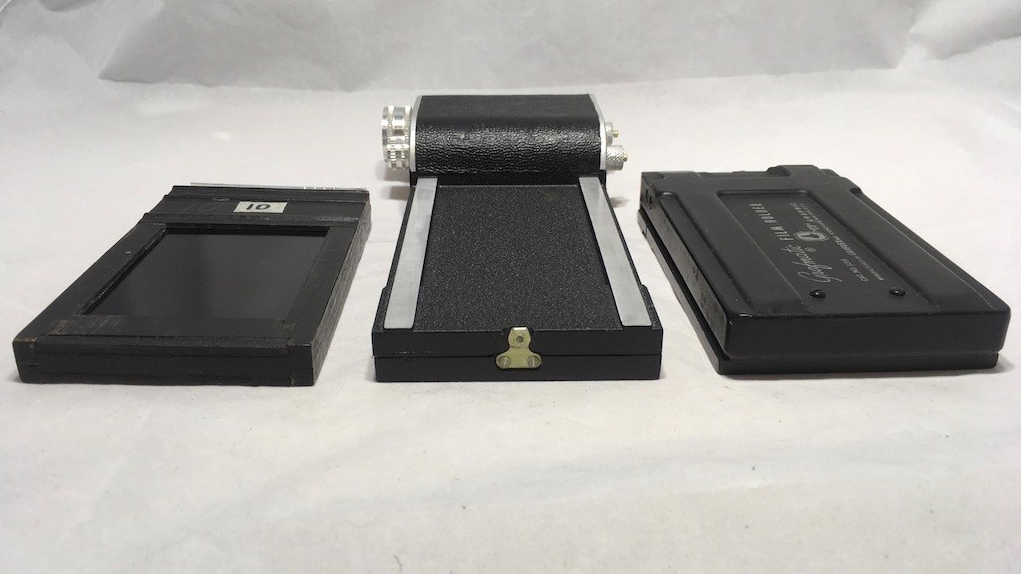
Holder, Adapt-a-Roll, Grafmatic
A wood holder is 13mm thick, a Grafmatic is 22mm, the Adapt-a-Roll is 17mm. Grafmatics will fit in some spring back cameras, but certainly not all and. not without a degree of risk even when it does. The Adapt-a-Roll will pretty much always fit.
Holder, Adapt-a-Roll 620, Grafmatic
So how do you load it? There’s scans of the original manual on the web but they don’t have pictures. There’s plenty of written descriptions of what to do, but well, here’s pictures.
Put a 620 spool on the take up and pull some paper off the feeder spool
Thread the paper black side out over the metal roller so that it shows in the opening of the holder
Feed the paper up through the slit in the holder and along the bottom into the take up spool
Start winding a little until it stays on the take up spool
Once it’s loaded to the point as shown above stick the feeder spool onto the pegs and close the holder. Slide the dark slide in not quite all the way, leaving just a tiny slot of an opening.
Crank the take up knob just until the tape that holds the film to the backing paper shows in the little opening you left, the slide the dark slide closed
Once you’ve closed it set the counter to “S” use the black marks for 6×6 and the red for 6×9
The depression where the foam goes to get your counter working
Piece of foam that’ll get the counter working
The frame counter works by registering the rotation of the silver roller the backing paper is pressed against. If it doesn’t count stick a piece of foam in the shallow depression as shown and it will put enough pressure on the roller to engage the counter. Remember the Adapt-a-Roll winds onto the take up spool emulsion side out, so if it seems wrong, it’s probably not.
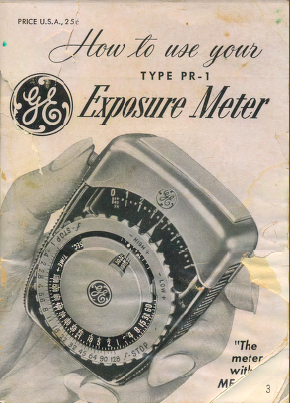
Some people call it a light meter, but it’s not. A light meter probably won’t help you with photography. Knowing that there’s slightly more foot-candles or lumens here or there doesn’t help. Knowing what shutter speed you need for a given scene, what f-stop you would need for your fixed shutter speed, that’s useful, and that’s what an exposure meter can tell you.
What’s the best all-time exposure meter?
Hands down, it’s the GE PR-1
Why is the GE PR-1 the best exposure meter?
It’s cheap, maybe all of 10 bucks on eBay including shipping.
It’s built like a tank so just about every single meter ever made is still in circulation
It’s a selenium cell meter so you don’t need a battery.
The zero point is adjustable so you can make sure it’s accurate.
The needle locks into place once you’ve taken your reading.
It has a massive range across two sweeps of the meter so a shift of a given amount of light registers as more movement on the GE PR-1 compared to other meters.
The GE PR-1 “trident” let’s you get readings for bracketing your shot almost instantly
It can measure reflected and incident lighting.
Huge range of film speeds, from ISO .2 to ISO 1600
Huge range of f-stops, from 1 to 128
Huge range of shutter speeds, from 1/3000th to 2 minutes
Use Example
So say you have a Lomography Diana +/F+ and you want to shoot without the lens and do some pinhole work. Grab a tripod and your GE PR-1. The Diana’s pinhole is f-128 just take your reading and you can see immediately that you need a two second exposure or whatever. Yes, you can do that with other meters and just count stops to get the right speed but it’s nice that you don’t have to.
If you have a shot that you absolutely need to have come out, meter it. Then you just do a bit of quick math in your head to bracket it. If you want to bracket but want to mix things up and not have the same shot use the meter. Here’s how, take your reading, and line up the center tine of the trident with the reading. Make your exposure for the f-stop or shutter speed you want. Then if you want to shoot one stop more or less exposed you can just turn the dial to the + or – tines. Easy enough to do in your head, but with the meter you got the information all right in front of you. Want to shoot it a stop under and wide open for some bokeh, read it off the meter. Worried about shake so much you want to use a fast shutter but still shoot a stop over, line up the + tine and read it off the meter.
Can you do that all just counting stops in your head? Absolutely, but just because you can bake a cake from scratch doesn’t mean you shouldn’t buy a box of Betty Crocker for convenience.




 Uncredited Work