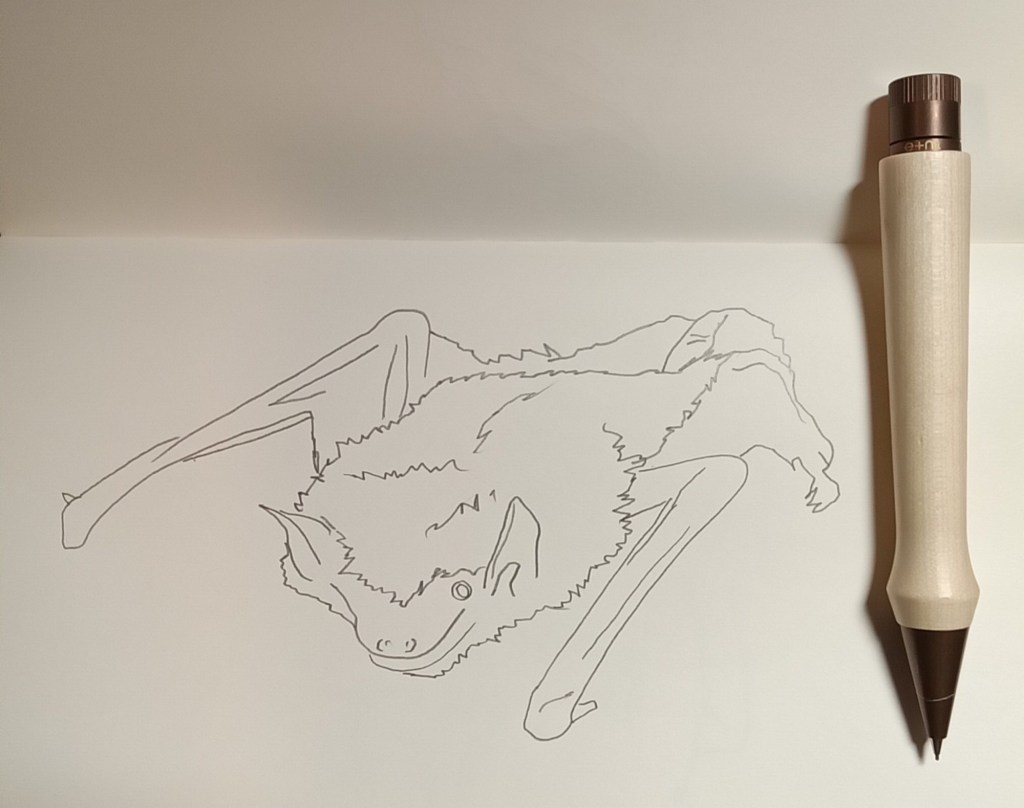
I don’t know what it is about them, the e+m pencils just all look good. New ones appear to be available rather frequently. They even have a 0.7mm model. At this point I wasn’t surprised to find that it uses a (seemingly unbranded) Schmidt mechanism. This of course means that the advance is accomplished with a ratcheting twist of the knurled metal finial. Likewise, it means you can get it in 0.5mm if you choose to replace it.
Draw all bats fast as you might
I hate the shape of the body. I mean it looks great, I simply cannot hold it in my usual grip. If you have a grip where your thumb actually touches the pencil, it’ll probably work for you. All the tripod and probably most of the related positions should be comfortable. If you grip with your fingers and the thenar eminence, good luck. It’s not possible to hold it comfortably that way. That’s good if you’re keen to abandon your unorthodox grip, bad if you’re married to it the way I am.
The weight and balance of the thing is pleasant. As is the case with the shape of the body forcing you into a “good” grip the short length and weight at the top will encourage holding it close to the point. No, there will be no dinner fork grip here. I think maybe this is the sort of pencil writer would like, this thought could be down to my feelings on holding it. The lack of any eraser may turn some off. I think no one uses the erasers in mechanical pencils anyway, I don’t.
You should draw. No, talent is not required. Whenever someone decides to tell me that they wish they could draw, I tell them that they can. If they keep talking, I recommend they search the web for “Tracey Emin monoprints”. That’s not to start a conversation about modern artists, it’s to get a reaction. That reaction is always more convincing than I could ever be. Anyone can draw. Most of the barrier to drawing is just doing it. The entry fee for that is wanting to do it. Success is when you want to do it, and have what you need to do it. Think back. Remember the quiet boring parts of grade school. Everyone spent hours a day around paper with a pencil or pen. Everyone drew. It could have been anything. People drew because they had time, and they had the bare minimum materials at hand. Some people may have even wanted to.
Just a couple more things I’m completely sure I read someplace else. Was it from Steven B. Reddy? I feel like it was from Steven B. Reddy. Excess time enables drawing without the need for desire as long as the tools are at hand. Excess desire makes up for not having the time, again, as long as the tools are at hand. The thing to remember is having what is needed to draw is what’s most important. That applies to all kinds of creative activities; it’s awful hard to sew without thread. There’s a popular sentiment in most activities that fancy tools aren’t needed to do good work. That’s true, they aren’t. The fact that some people aggressively go out of their way to prove it in a sort of desperate and intense way is telling. They probably have a favorite pencil brand. They know the weight of their paper, how much cotton is it. At some point, they’ve owned a pen that cost over one hundred USD.
Those people are not spouting hypocrisy. They’re trying to be encouraging, they’re just leaving out something important. Henry Rollins does some spoken word performances. In one of them he talked about this German handheld manual can opener. It’s designed so that you want to hold it; need to use it. A quality pen, the right paper, it makes a difference. They can be the sort of things that foster a desire to use them. All of that is meant to explain the way particular objects can be key to the construction of a habit. This extends beyond the obvious quality sketchbook and pleasing pencil, it’s my feeling that bags are the next logical thing.
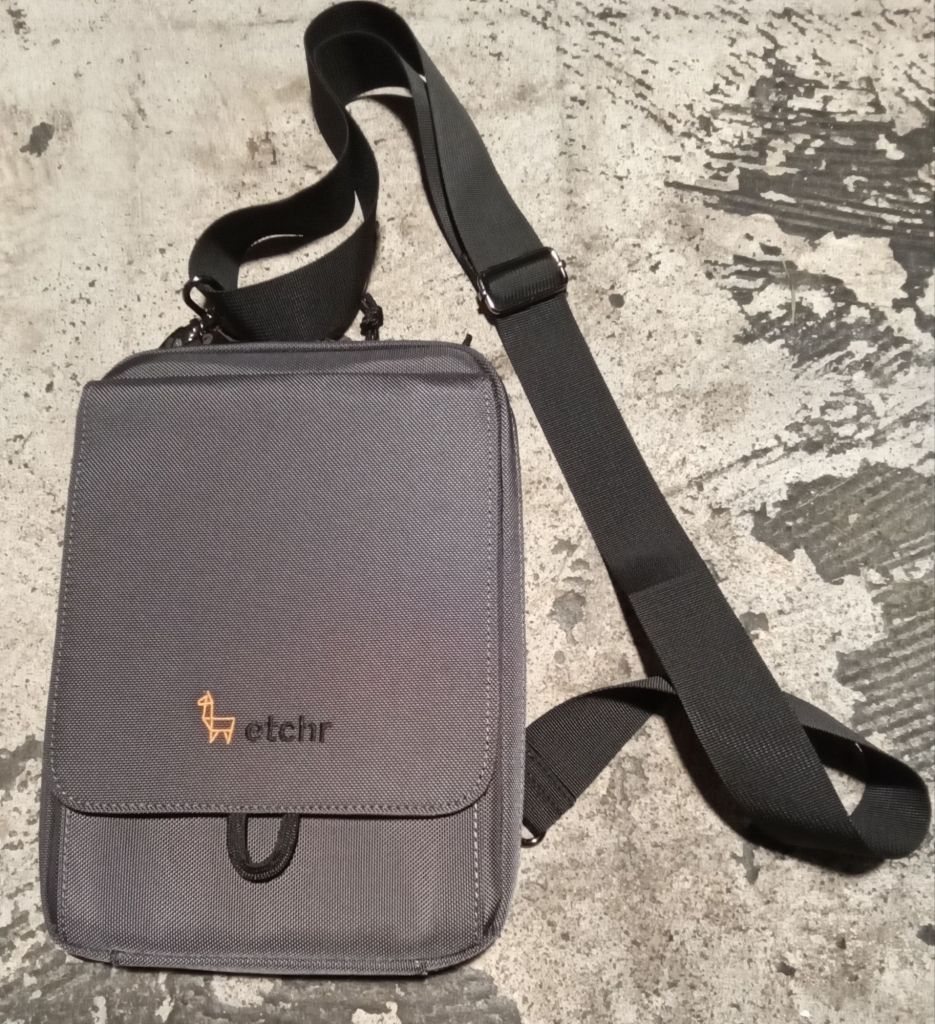
In the same way it’s possible to draw with a burnt twig, it’s possible to carry what you need to have to draw in something that’s already being carried. A sketchbook and a pencil can fit into most purses, into whatever you carry your laptop in, into a jacket pocket, whatever. Here’s the thing though, a dedicated bag feels different inside your head. People talk about this or that smell bringing back a food of memory; that one special song that cracks the door separating the senile demented from the rest of the world. You can build that same frame around a bag. The Etchr Nano Satchel is perfect for that. Stop reading now and buy one.
I hope you’re back, even if this reads like a life story prefacing a recipe for rice and beans. Know, the mind is an overgrown field. The waist high grass is green and strong in the soft way a stone is. Certain thoughts, particular actions, traverse the overgrowth leaving stalks pushed aside as by a deer’s passing. The more the same path is tread, the easier it is to follow later. If at first it’s hard to discern, in time it’s easy to see. After a while, you can follow it blind; the stalks only just making contacts on either side. There’s nothing ahead needing to be trampled down. Draw today, and tomorrow and tomorrow, and all the days to come. Cut your path.
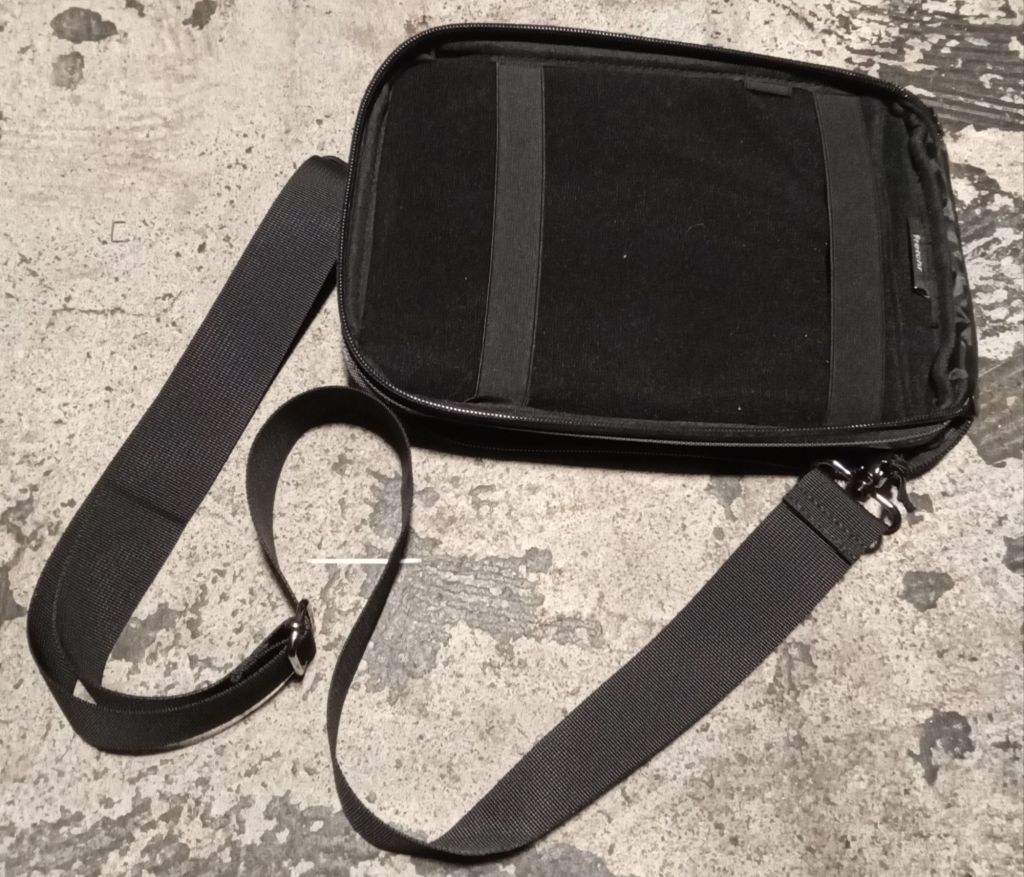
This could be done with something you already have. That’s harder. Something you already have has it’s own lines in the field, however faint or hard packed the soil. So start with something new, like the Etchr Nano Satchel. It’s purpose built, which lends it to a specific use, making it easier to begin the right path across the field. And it’s small, presenting no awkward bulk to contend with. Slim, resistant to carrying other than what’s intended. It’s great except that it looks very much like something worth stealing, so it’s a big plus if people are scared of you.
Not pictured, camera, tablet, sketchbooks, pencil, lead refill, USB brick, USB cable, pigtail AC cord.
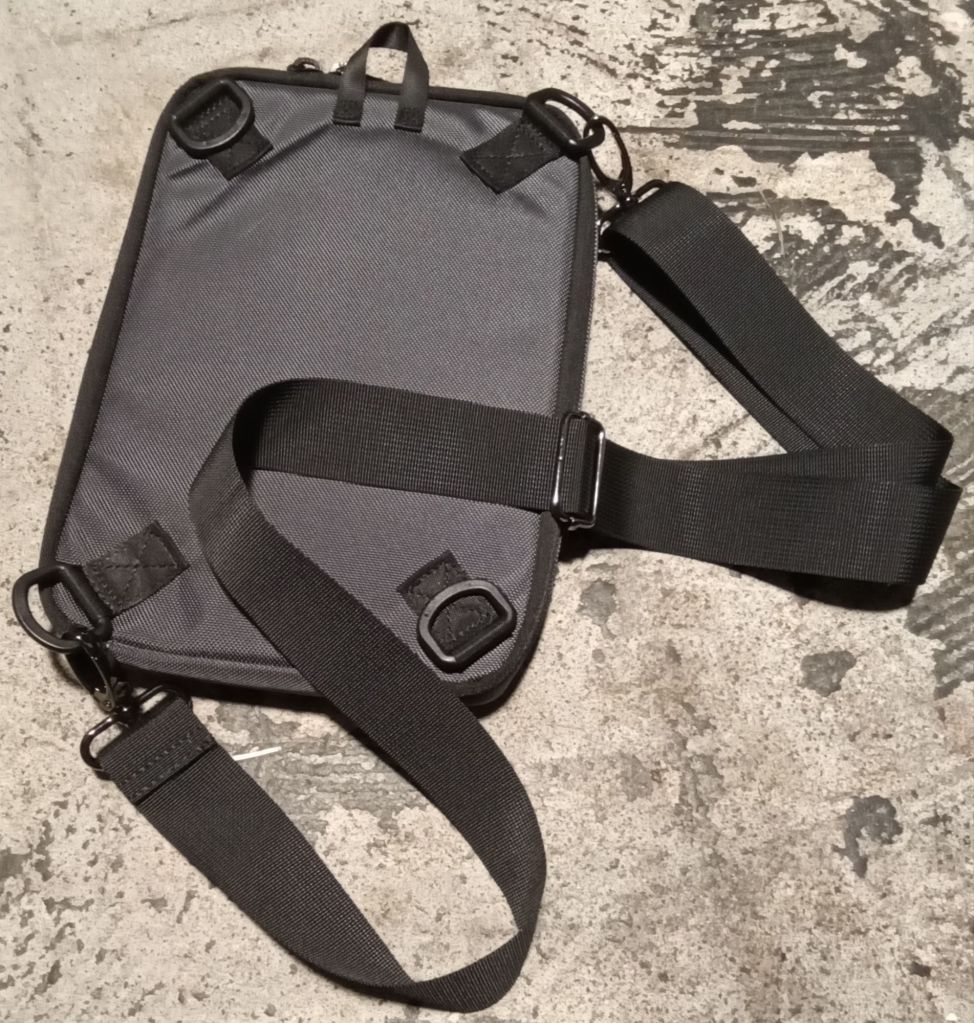
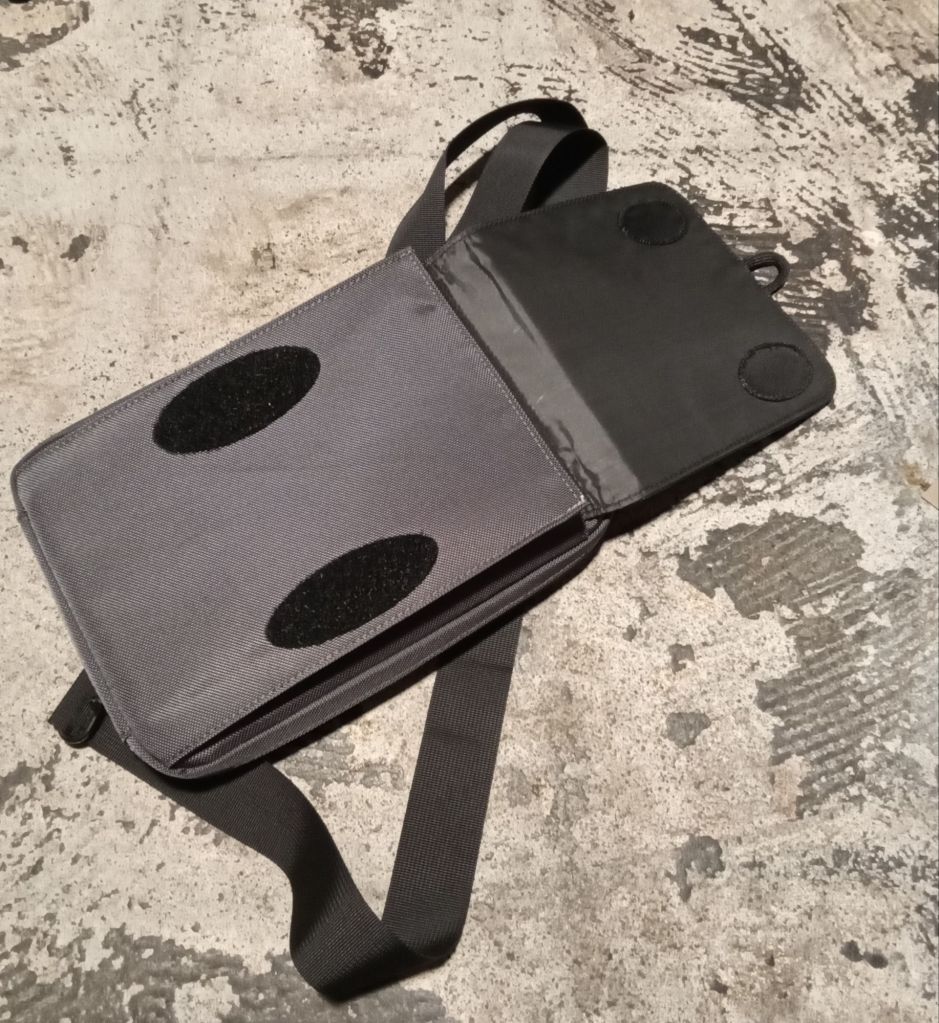
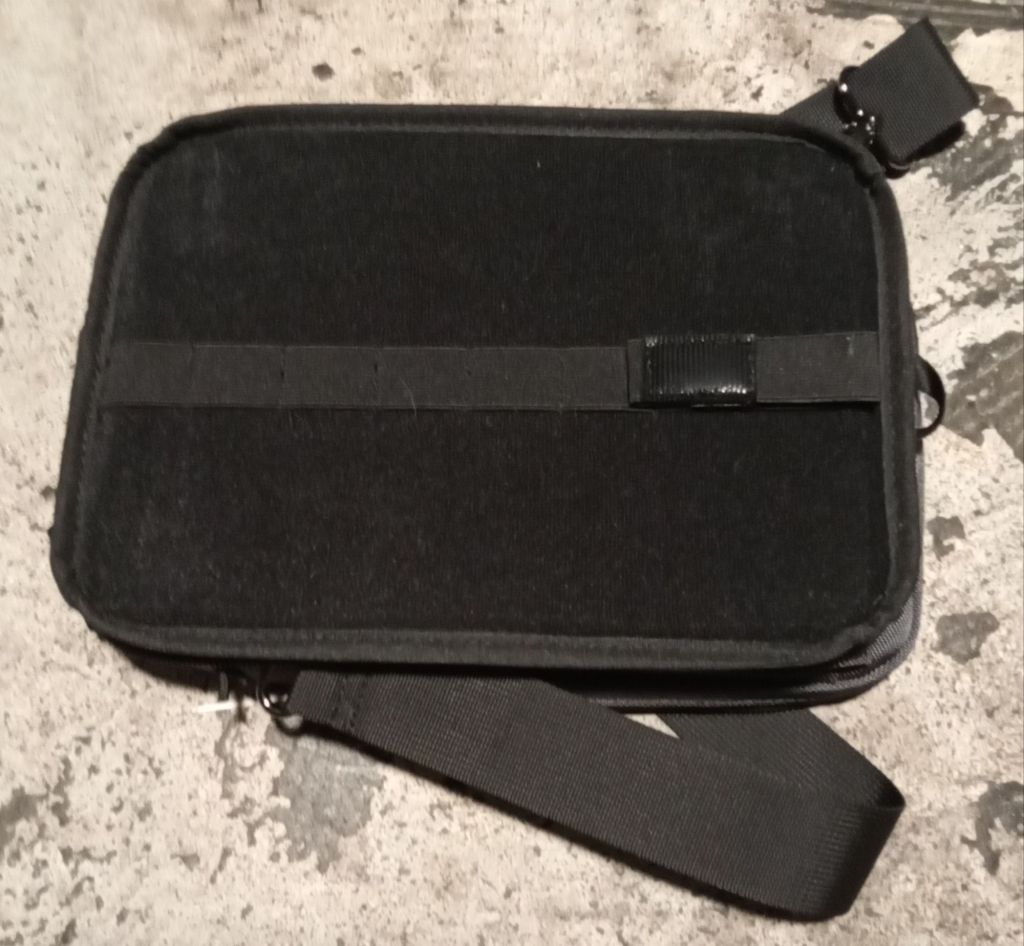
The strap is wide and sturdy. It has all metal hardware which is nice for comfort because it can be less substantial without sacrifices to size like plastic would have. Click it on to any two of the 4 corner D-rings, which are plastic. Opposite corners are comfortable both in bag mode and in desk mode. The big outer pocket is more accommodating than it looks. Not just because it’s sewn with a sidewall fold, the oversized velcro pads help too. It can close pretty securely thanks to them, and it’s loud if someone tries to open it, for added security. Everything that isn’t actually for drawing fits in there.
Double zippers open it up to the fuzzy interior. I’m sure there was a reason to make that the material, I don’t understand the choice. There is a velcro tab on a strap that will hold the sides together, I don’t find it necessary. One side, the side that will be facing the floor in desk mode, has a series of elastic loops. They are different sizes. I put a pencil in one because the one I’m using now is too wide to fit easily in the pen loop on the working side. The working side has two elastic bands that can hold a sketchbook in place. I don’t use them. I think if I was using watercolors now I would use them. There’s also a thin pocket, it’ll fit an A5 sketchbook, as long as it isn’t too thick, though it is a tight fit.
Is it really useful? Is it something worth carrying when it really is purpose built for one thing? Yes, I think it is. When you’re on the road with the clothes on your back you really can get by with just this, if you’re used to that sort of thing already at least. For the homebody, the car-owner, someone who drives places instead of riding on busses or trains it may not be. I don’t know. I’m not that person. There’s a lot of places out there people will not let you sit. This allows you to get by standing, without your arms doing that weird shaky thing after holding a sketchbook for an hour.
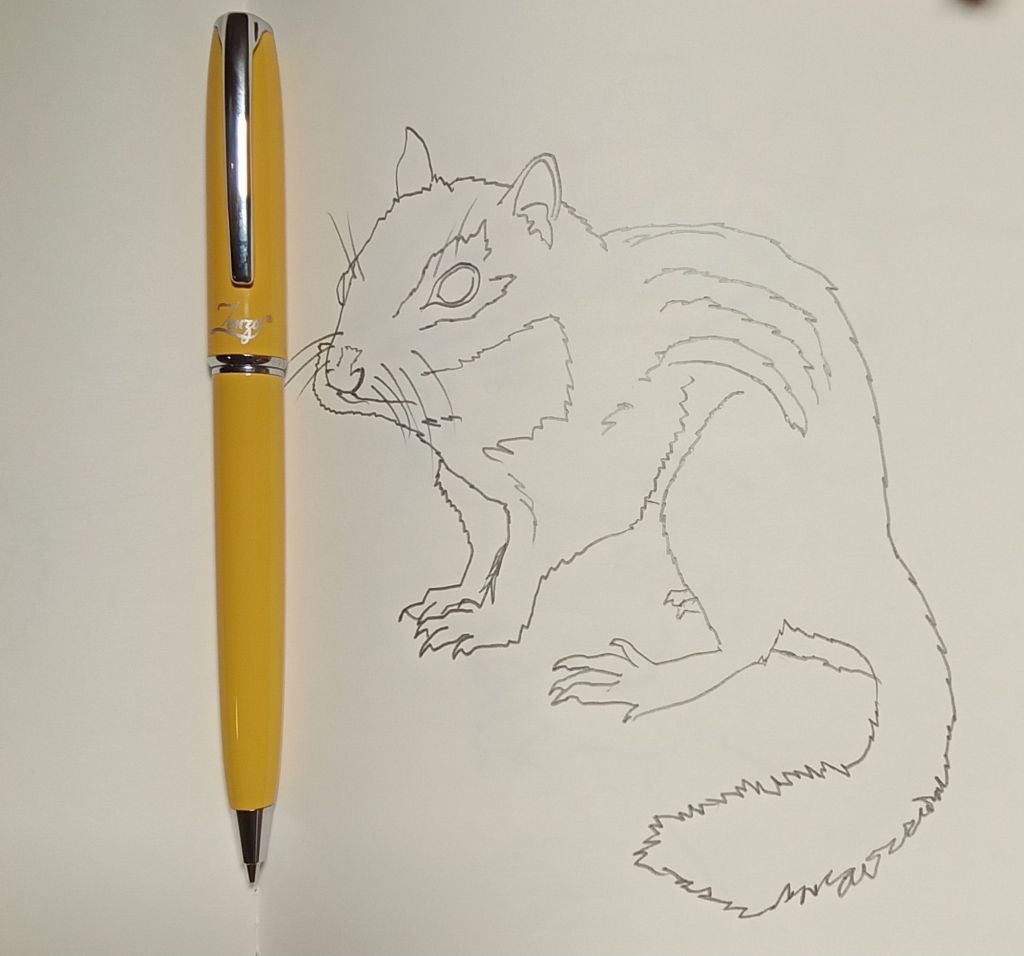
I have a canvas notebook cover. It’s pretty and I like it. The outside is very brown for a green. The inside is on the yellow side of orange. I like it because I can toss the cheapest A5 notebooks in it without worrying about them getting mangled or having to find something to support the back of the softcover. It has a pen-loop, and it’s elastic, but it’s really meant for pens, nothing the diameter of a round or hexagonal U.S. pencil. Enter ZenZoi. The pencil I got from them is a very compelling yellow.
Ground squirrel for scale
They make pens as well, and the pencils are made to look like a posted pen. This is nice because it looks good, nice diameter, but it’s still a pencil. I’m no expert, I just enjoy a good pencil, and I feel I can say there’s much more variety if you don’t mind a narrow bodied pencil. This is true of the disposables and the fancy, name-brand, pen-companion pencils as well. That’s either true, or I’m sheltered.
A pencil that looks like a posted pen is interesting. Will it push to advance? No. It uses a standard Schmidt brand mechanism and you can choose from 0.5mm to 0.7mm. The “cap” turns slightly clockwise to advance the lead. I think maybe the pencil is too robust for the mechanism, or maybe it lacks finer quality engineering or some sort of lubrication. I say that because the twist doesn’t feel snappy. I don’t know why I think I’d prefer it to be snappy, but here we are.
Where was I? It looks nice unless you look to close. I half expect the chrome to wear off and the finish to chip. It doesn’t scream cheap, and it’s certainly not junk. Rather, I get the impression sacrifices were made to keep it under forty U.S. dollars. It’s a shame they didn’t spend a little more, in a better quality I think it could be a popular in the seventy-five too a hundred range. Maybe things will go that way, I hope they do. I’d buy another one then, for now it’s strange. It’s not anything special but it has potential.
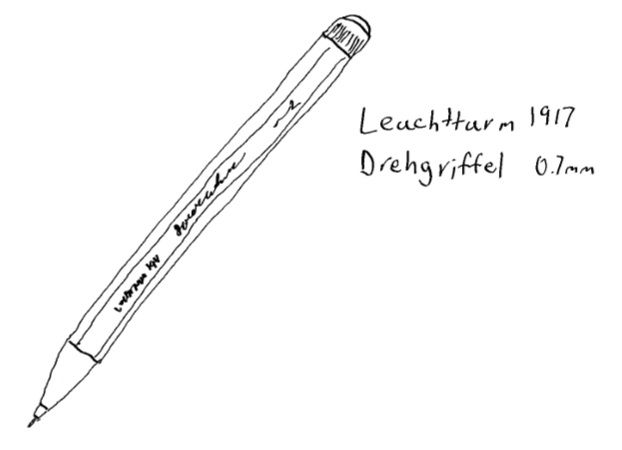
Honestly, I knew they made notebooks, turns out they make pens and pencils as well. The Drehgriffel Nr. 2, Pencil uses a Leuchtturm1917 branded Schmidt mechanical pencil mechanism. This means that if you so desired you could replace the original 0.7mm mechanism with a 0.5mm mechanism. That might be worth doing if you’re so inclined. And I should mention you can buy both sizes of Schmidt mechanism on their own directly from Jet Pens.
Anyway, Leuchtturm1917 has made a very nice pencil. It looks good, which would be hard not to considering it’s available in every color. It feels premium. The weight is nice with lovely balance. Even the mechanism is easy to adapt to after a bit of practice. It’s a clicky pencil, but that click is achieved by a twist of the finial, rather than a press.
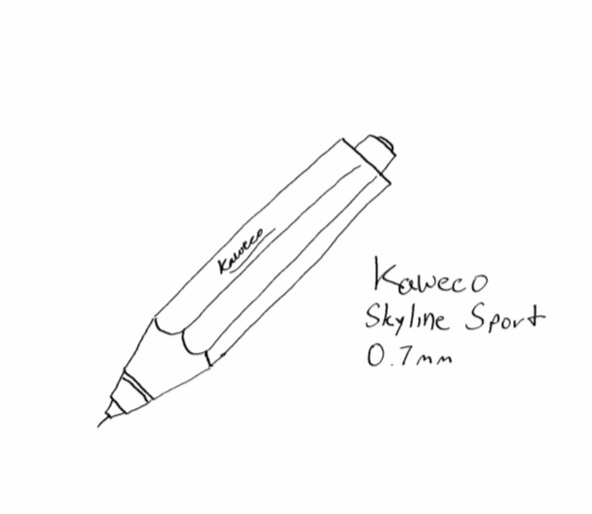
Drawn on a Kindle Scribe because easy
It hasn’t got a clip, and that was probably and esthetic choice, but it’s the size of a standard hexagonal U.S. pencil so it wouldn’t be impossible to find one to add on if required. The standard body size also means it fits in any loop intended for a pencil. There’s a lot to be said in favor of standard dimensions that I’ll spare you from here.
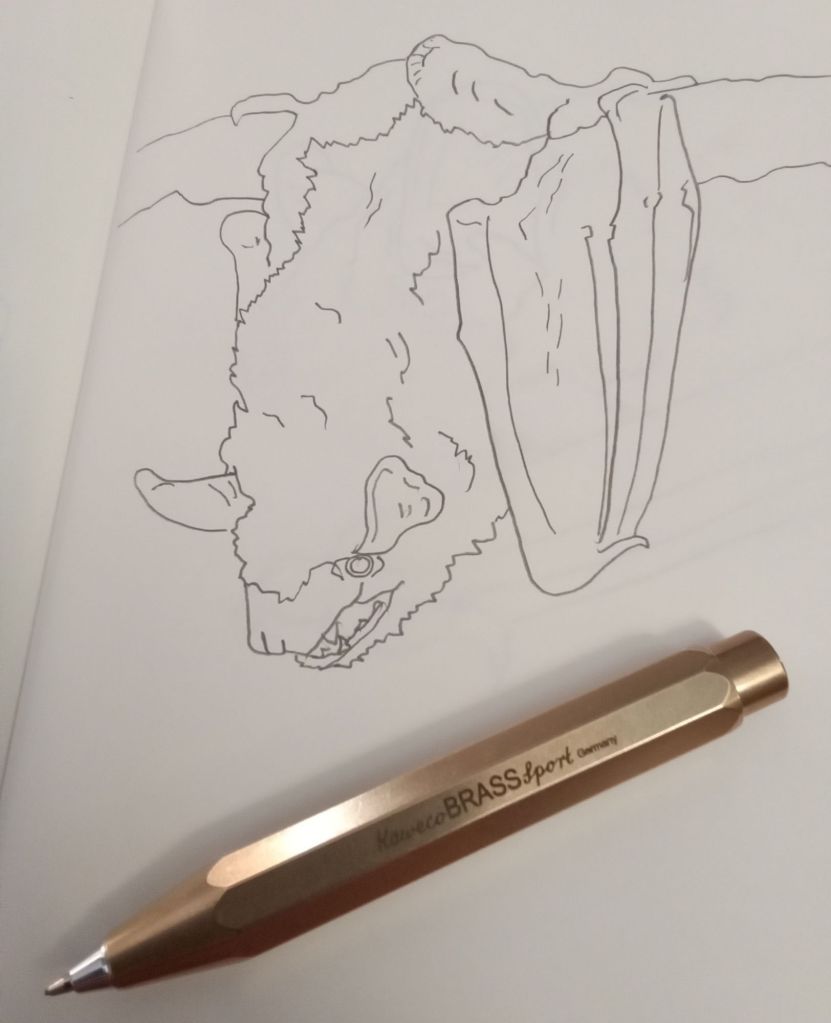
I don’t know why I tried another stumpy Kaweco 0.7mm pencil. No, that’s inaccurate. Being brass it should age noticeably, and that’s appealing. It’s heavier too, for a pencil it’s size, and that feels better in use. It’s still short though, and with such fine lead It’s hard to work large enough for it to not get in the way.
I think these are writing pencils, and I should learn to accept that. That my own habits are such I’ll never enjoy using them. It’s a shame though, it’s pretty, and feels reassuring in the hand.
Here it is from Jet Pens, if you’re interested. And you should buy it there, they’re very pleasant. Shipping is speedy and free for orders of thirty-five dollars or more.
Drawn on a Kindle Scribe because yeah I have one now.
Kaweco makes a whole lineup of writing implements that are the same body with different guts. The fountain pen is a departure, being a two-part, screw-cap affair with a nib, but you can still see the family resemblance. The rest are basically the same. Short chunky bodies with a button and a faceted body. They sell clips separately and that’s nice I suppose if you’re the sort of person to have opinions on clips.
I picked one up after finishing a couple A4 sketchbooks in pencils with leads from three through 6 millimeters. I found I quite liked the short and fat bodies. I expected to like the same sort of body in a 0.7 millimeter lead. I didn’t. Thin lead made me want to work small which made me want to do more with details which made me very aware of how much paper a stub and hand blocked out. I couldn’t hold it farther from the tip because there was only a few inches to work with anyway.
If you gotta have a thin lead, a thick lead, a ballpoint, a fountain, and a kitchen sink all in the same color way, then sure. I can see the appeal. They have some very attractive opaque and translucent plastic options, along side various metals. I expected to like it, and honestly I think I do, or as much as you can like something without ever wanting to use it. Maybe if you’re a writer? I don’t know who it’s for though.
Here’s three color families of the pencil from Jet Pens.
Sub-millimeter leads are basically all in pencil bodies that have a discernible click when the lead is advanced. This is of course for manual advance pencils only, the automatic pencils pretty much don’t click. There are many mechanical pencils out there, from fountain pen like aspirationaly priced desk queens to disposable plastic abominations that feel like they’re produced by collecting the metabolic byproducts of genetically modified escherichia coli.
The thing is, every pencil can mark a paper. A used Dodge Neon can get you to your destination as much as any Cadillac might. Whoever invited you to the party cares that you’ve shown up, not how you got there. It’s the same for art, you’re selling a product not a process. And if I die on a hill I’ll die on that one. When a work is valued for how it was made instead of what it is it’s the luxury wine market all over again. Why then does it matter how nice one pencil is compared to another? Only because you’re going to be holding it quite a lot and if it feels better in the hand that can only help.
Process matters because that’s where every artist lives. When other people start caring about where you sleep at night they stop being customers and become patrons. That’s when art becomes silly. The point though, is that be it a boardwalk caricature, an architectural mantle piece for the local B&B, an eye burning rule thirty four commission, a landscape sold on consignment off the wall of the local coffee shop, or just figure practice, process is what ought to matter to the artist and product is what ought to matter to the buyer.
Which is why having a nice consistent tooth on the paper, a comfortable grip and reassuring balance to the pencil makes a difference. It’s why a smooth lead that lays down nicely on the first stroke is important. Almost anything can get you where you want to be and that’s a valuable truth. It doesn’t mean that you shouldn’t make the trip if you can’t make it in style, only that it can be worth the expense to buy the better tools if they’re affordable.
So I think I’ll write about mechanical pencils for a bit.
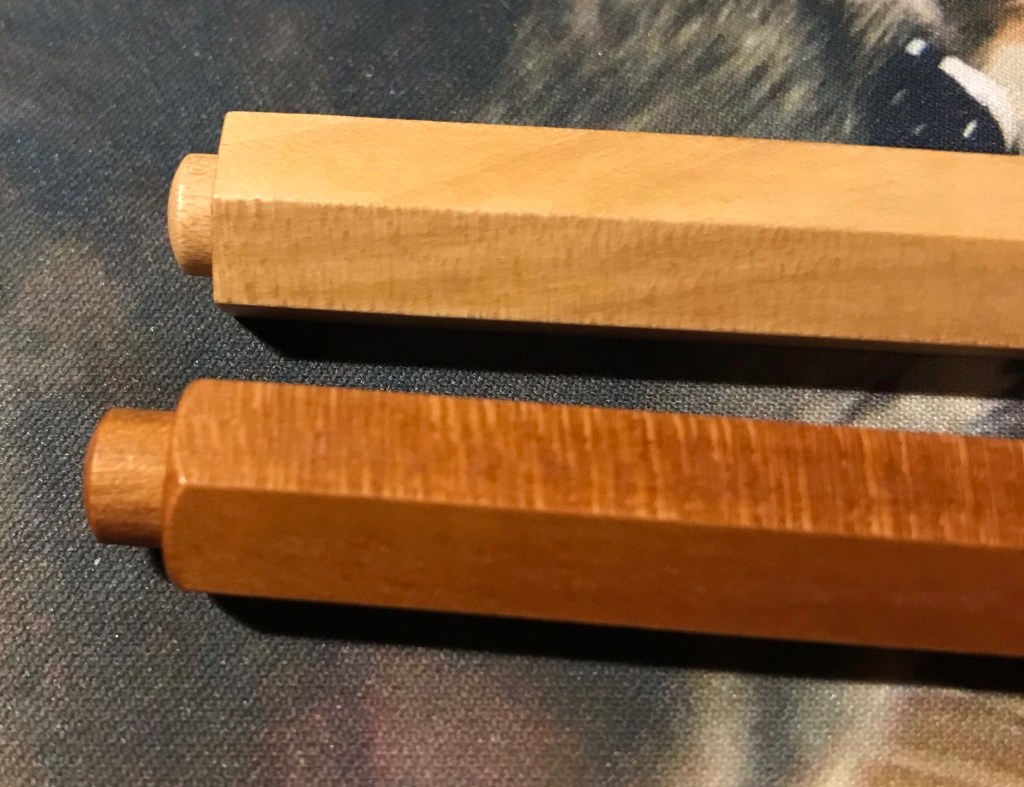
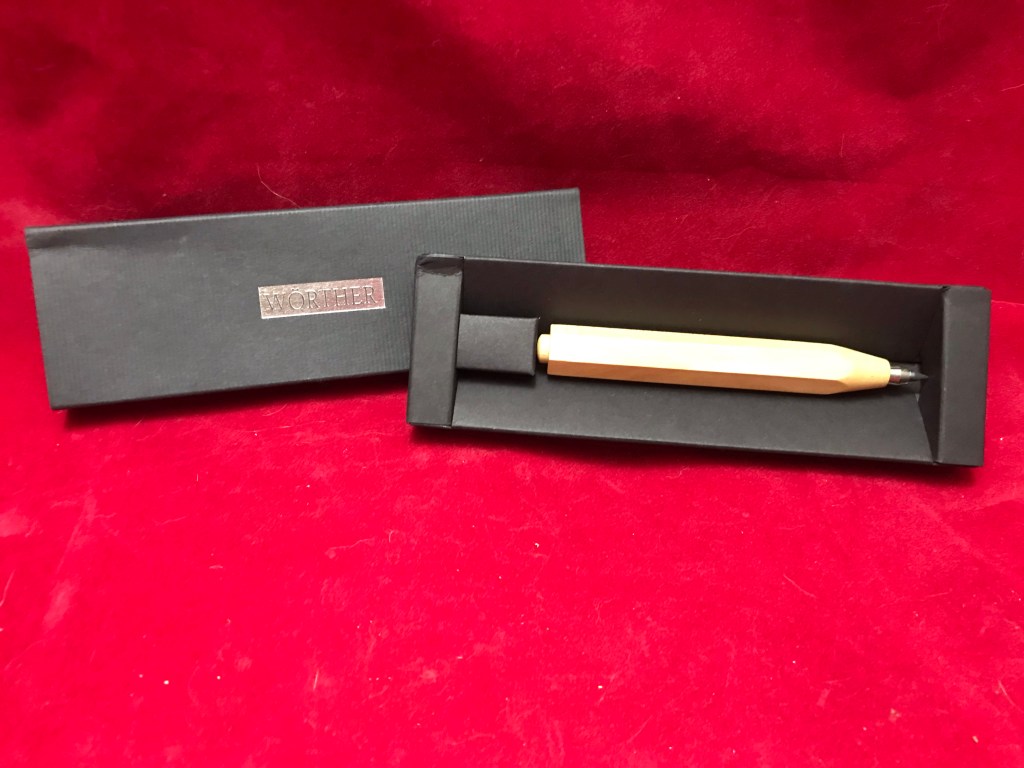
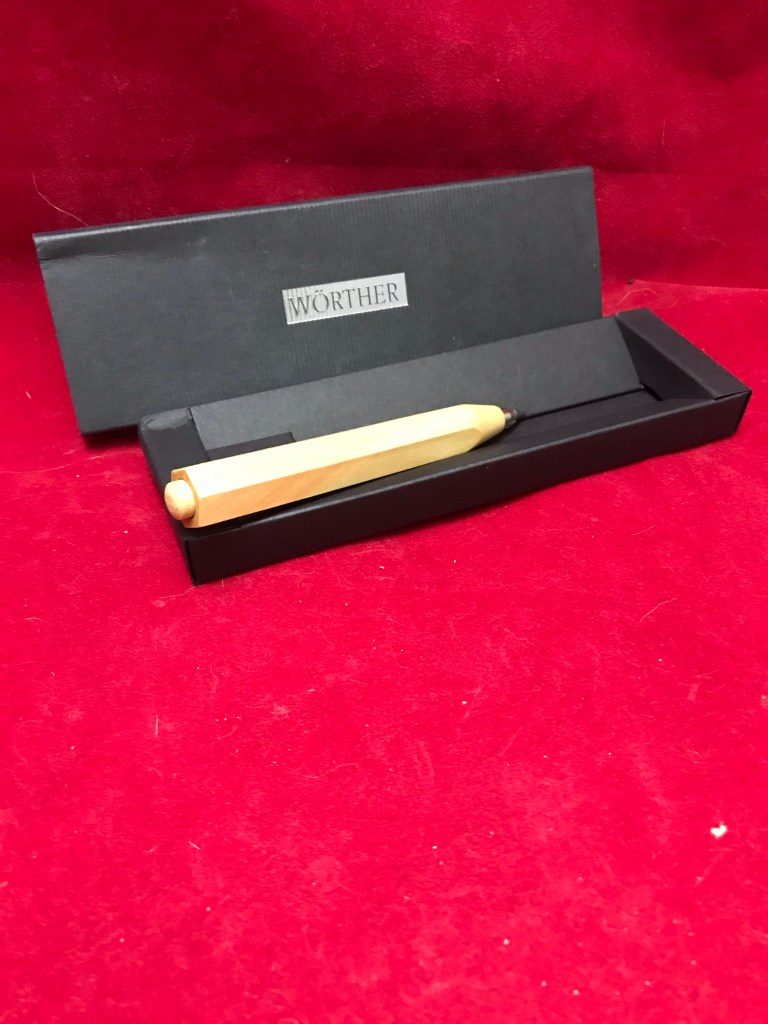
I found what from as far as I can tell is an old version of the pencil. I suppose it could just as well be an authentic version of the pencil with the previous being counterfeit. It doesn’t feel like the sort of thing that would be plagued by fakes, but of course the most commonly counterfeited piece of U.S. currency is a five and that feels like as lousy an idea.
This edition has the notable feature of having “WÖRTHER GERMANY” in silver printing around the axis of the clutch release. The other version is entirely unmarked. Additionally, the angles of the facets at that end of the pencil are uniformly rounded. In the other version it’s a sharp edge.
I can’t explain it but the old version feels better. Functionally I notice no difference. By weight the old version is a touch over a gram heavier, but that’s all. I find that I prefer it.
I picked up this pencil because I wanted the wooden Shorty 3000 to be much better than it was. One of the indictments against it I didn’t mention in that pencil’s review was something quite apparent visually. Between the wooden body and the metal clutch leaves was a plastic nose cone. The transition from body to cone was right where you’d try to hold it, and just sharp enough to be uncomfortable. Enter the Hexagonal, closer in appearance to the shorty, seemingly “all” wood, and lacking a clip.
I say closer to the Shorty, but that’s only if you judge the closeness by how it feels in hand. Compare the Shorty 3000 and the Hexagonal to the Shorty mechanically, looking only at the clutch release and it’s clearly a sport. Normally, I’d abhor the lack of a clip but the six facets are broad enough to stop any rolling. In fact, at it’s short length the absence of the clip helps it due to the practicality of rotating it in use.
A lead over two millimeters is a strange animal. Decimal leads need no pointing. The standard two millimeter technical pencil leads generally have a specialty pointer, as do the five and up leads. Around three, there’s nothing. One’s either burning up the sandpaper or cursing a blade. Unless you get through all the stages of grief to acceptance. Know you’re not going to have a sharp point, maintain the point you do have by rotating the pencil ever now and again. Without a clip bumping the hand it remains comfortable in all positions.
I like this pencil quite a lot. It’s alive to the touch, visually appealing, and practical. For $26 USD plus shipping I’d buy it again if it was lost or damaged. I do not expect it would be universally loved. One must be comfortable with a short instrument to find in it anything but novelty.
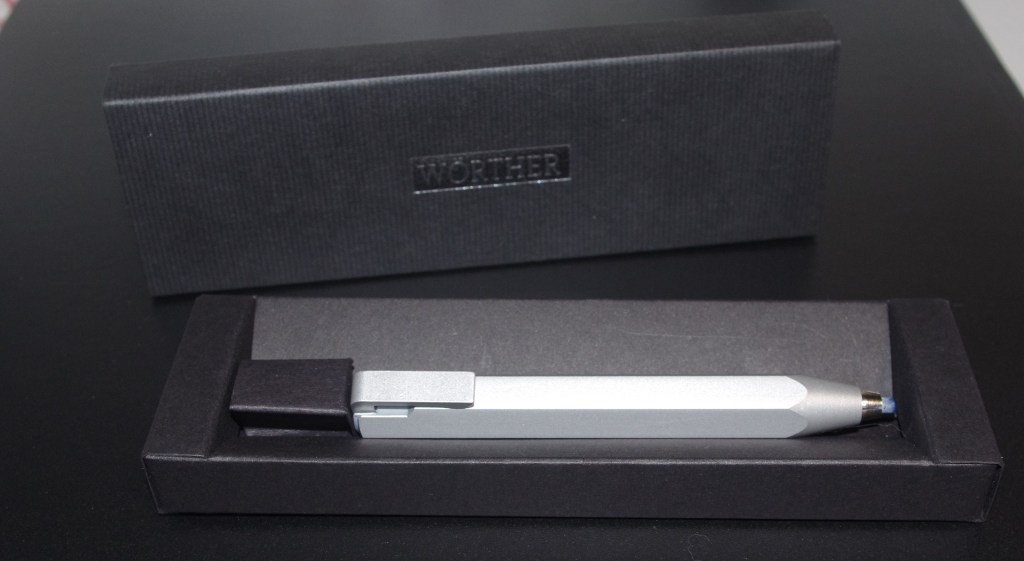
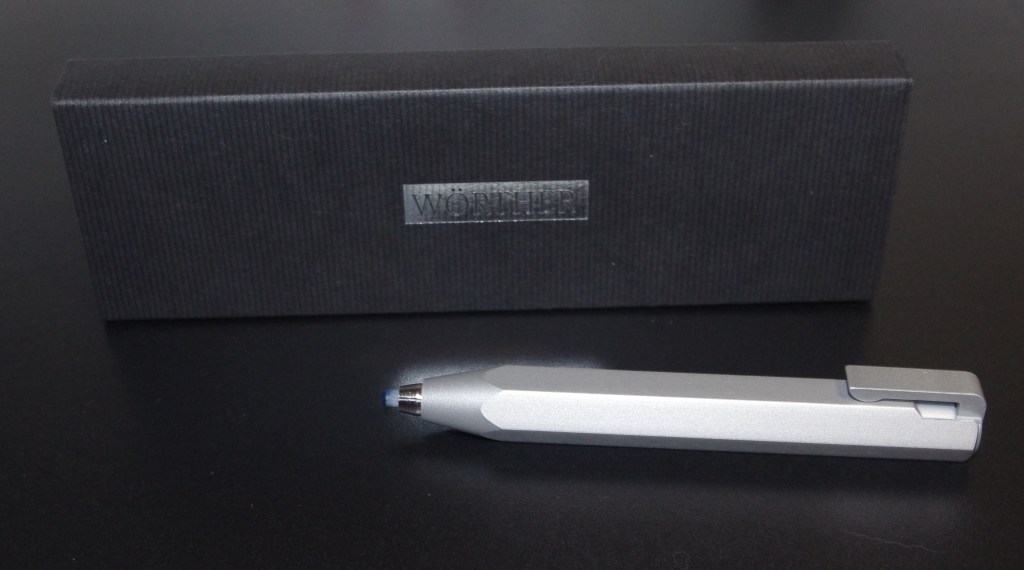
The main point I hold against my other Wörther pencil is it’s mostly plastic construction and the resulting exceedingly light weight. They offer the Shorty in all plastic in a rainbow of colors which I wrote off as certainly too light and all wood which I passed over for the same reason. In the pursuit of something more substantial I picked up the pencil in “Natural Aluminum.” Calling it that appears to be done to draw contrast with a polished, knurled, or brushed aluminum that’s common on writing instruments.
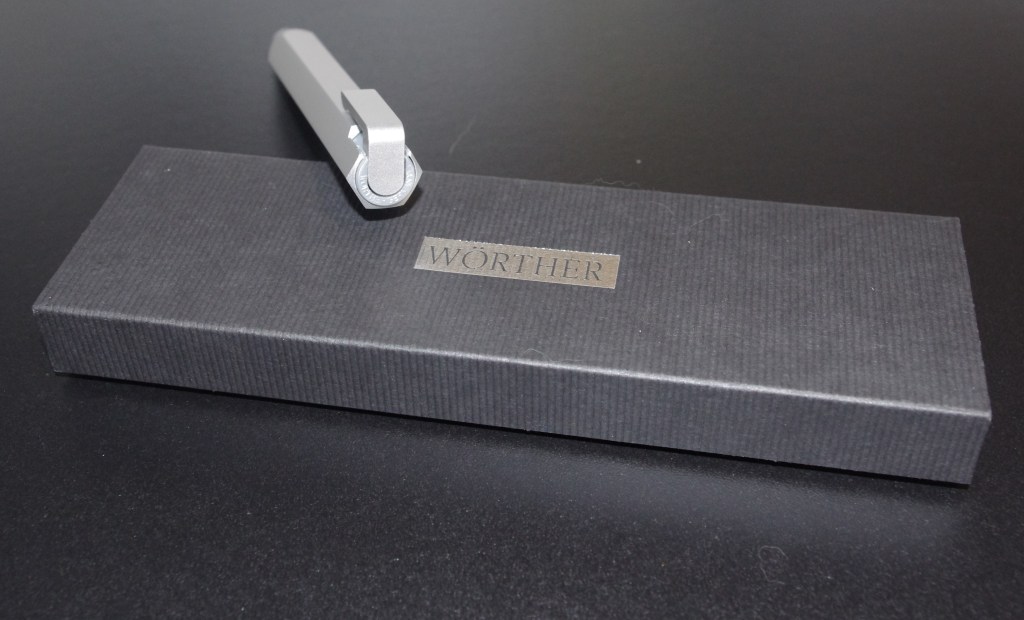
As with other variations of the Shorty the clutch is four segmented, the body is hexagonal in section, and the button depresses quite deeply. Unlike other variations the clip is hinged and smoothly pivots up from the body. It’s a small thing, but a nice touch, even if it’s unnecessary because the clip naturally stands off from the body a bit more than one may expect. That the clip is also aluminum, with the same finish as the body was the right design choice. The leaves of the clutch are a shiny steel, and there’s a small crescent of plastic on the button (embossed with the brand), based on which I expect Wörther could have easily gone with a steel or plastic clip; so their choice is appreciated.
It’s not a heavy pencil, but feels substantial, and for forty five dollars it’s not a pencil you’re going to buy for each color lead you plan on using (like you would with the seven dollar rainbow plastic models). It’s a pleasant pencil though, particularly if you like the Wörther leads and want to use those in a native pencil. It’s chunky and something about the natural finish makes it feel delicate in a way another metal wouldn’t. The six facets of the wide hexagonal body make it hard to hold comfortably in a non-standard grip. This could be good or bad depending on if you’re trying to break a bad habit or not.
If I lost it I would be sad, but I don’t think I would replace it. I could see buying another as a gift. I do not expect it would survive unscathed knocking about in a pencil box, it might not scratch as readily as I expect it may but the sharp lines where the facets come together seem only too delicate.
 Uncredited Work