Amazfit GTS Four Mini (released July two thousand twenty two)

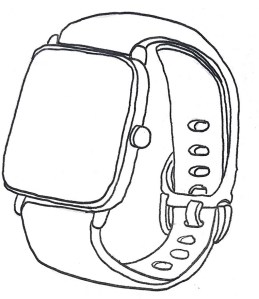
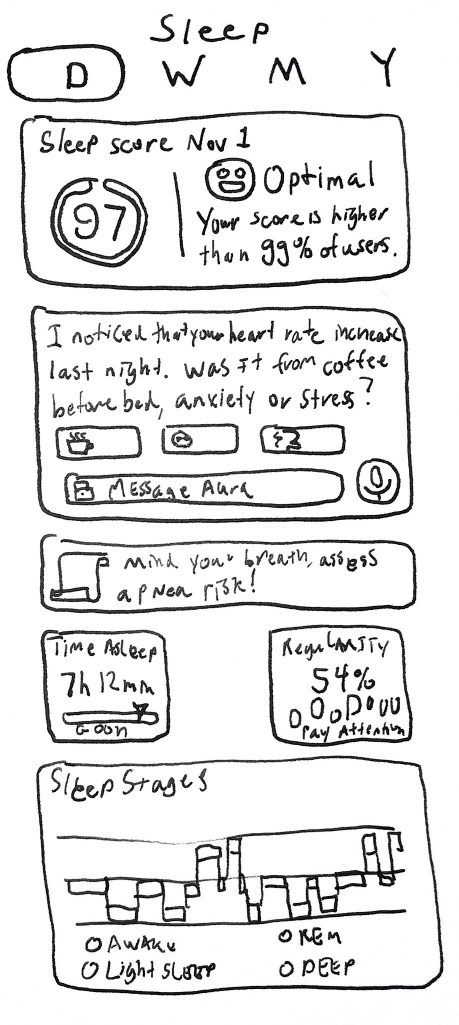
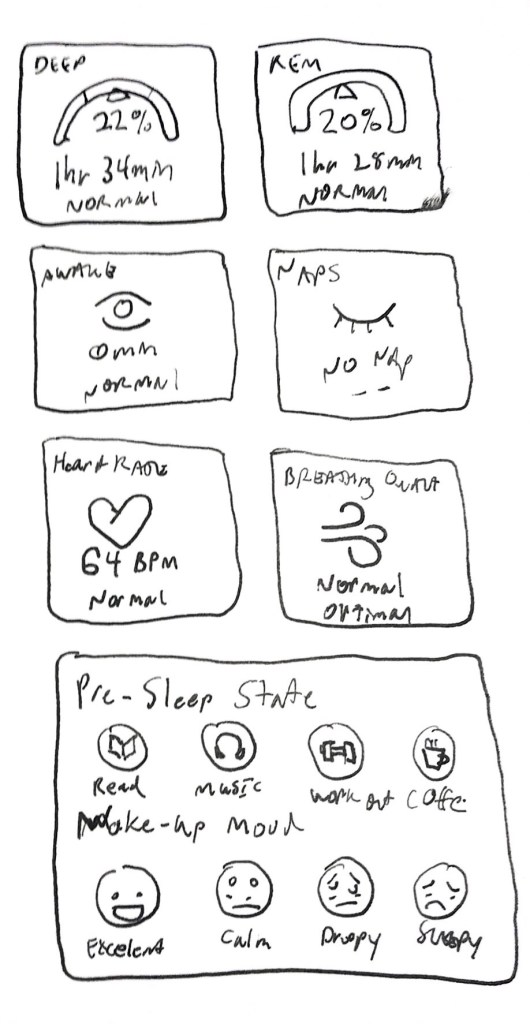
Everyone is forgiven for thinking a product named Amazfit is made by Amazon. Don’t think about it too much though because every Amazon device retains the complete un-massaged form of the name. It’s an Amazon Kindle Oasis, not an Amazbook. Amazfit is actually owned by a company named Zepp Health which explains the name of their devices iOS & Android app, Zepp. It’s noteworthy how hard they push Alexa in their ad copy anyway. Besides the Zepp app, I should note that the watch runs Zepp OS (version one, so a number of features found in version two are absent-more on that later), meaning you’re locked into their ecosystem as far as what is available on the device itself. That’s probably the reason they push the fact that there’s support for something as mainstream as Alexa. It looks like a slimmer, sleeker Apple Watch and it tracks sleep automatically. Supposedly that includes naps, although it didn’t pick it up when I laid down for an hour one afternoon. I had the same issue one night where I went to bed at sunset, slept for three hours, woke and had a bit of a run before laying back down a couple hours later around two. It did not include my second sleep, as a nap or otherwise. I wonder if that’s because I removed the watch to have a shower? Which is technically unnecessary, with it’s being waterproof and all, but what monster can stomach soap on a watch? Generally, it seems to detect sleep very well, reading before bed isn’t going to add an hour of sleep time, which is nice. This watch has an accelerometer, GPS, pulse oximeter, and microphone. Surely it has a microphone, how else would Alexa work? By using your phone? Alexa on the watch only works via Bluetooth tethering to a smartphone, but that does not include high jacking the phones microphone for audio commands to Alexa, those actually come from speaking into the watch. Given that relies on tethering it’s odd that it doesn’t have the option to use the phone to reply verbally, it responds in text on the watch face. Everything but the GPS likely comes into play for it’s sleep tracking, which is quite robust without a subscription to either their Zepp Aura Premium or Zepp Fitness Membership. For additional sleep tracking features the Aura subscription may be worth it. Priced at fifty USD per year, or just over four USD per month I’m seriously considering it though I expect I’ll hold off until I’ve tested additional devices. With a full color AMOLED touchscreen (there’s also a crown button that doesn’t turn like some more premium devices) display (it is a smartwatch after all) some sleep metrics can be viewed directly on the device. The sleep data is presented in two pages, with the first displaying total deep sleep time, sleep time, average nightly heart rate, and a sleep score. I rather like the score. All other sleep data, current and historic is only available in the app. Sleep has it’s own page in the app, with Home, Workout, and Profile being the others. Profile matters because that’s where various watch settings and preferences can be controlled, sensors turned on or off, that sort of thing. For sleep, there’s two specific toggles that may be turned on. First there’s assisted sleep monitoring which turns on or off automatic sleep tracking. Second there’s sleep breathing quality monitor that monitors breathing during sleep. It’s unclear if the way it monitors breathing is by pulse, oxygen saturation, movement, sound, or a combination of each. I expect it’s using all of them, just based on some of the information provided. Turning either of the sleep related settings on results in a warning that it will reduce battery life. It’s nice of them make the effort to be informative, but it’s also, like, duh. The advertised battery life is fifteen days. After ninety six hours battery life was at seventy percent. It’s nice to know one can spare a couple hours to charging one day each week and have no other concerns, even with all the default settings (pulse every ten minutes, auto brightness, raise to wake, display timeout at ten seconds) and the sleep and breathing monitors on. A final sleep adjacent feature which can be turned on is an intelligent alarm clock. It’s intelligent in the sense that it will alert based on sleep cycle at some point in the half hour leading up to the set time, or at the set time if it can not find an optimal sleep cycle in the prescribed half hour. The idea is that it less jarring than an indiscriminating alarm. The sleep page in the Zepp app is broken up first by period. I can’t speak to how normal my sleep stages are but it’s rare that I’m not awake already or in a light stage when the alarm time comes ‘round. The sleep data gets grouped as granular as day, and then steps back to show stats by week, month, and year. The year feels ambitious. Can a user be expected to carry on wearing the device for a year, or replacing it in the event of failure? If it’s found valuable enough, and it tries hard to be, it very well may. At the day level it provides a sleep score, and more interestingly provides some insight into where that falls among the ranks of their users; your score is higher than this or that percentage of our users. It’d be nice to know how many users that was. They then pitch a premium feature, a sleep health report including sleep apnea rush, insomnia, sleepiness, and restless leg syndrome. As I wrote above, I’m tempted. It does still call attention to various breathing concerns even without the subscription. Time asleep in hours and minutes is then shown and qualified (pay attention, good, and so on) and tapping it will show that data for the past seven days, a percent ranking among other users, and some condensed general knowledge regarding recommendations for duration. Next it shows the regularity of one’s sleep, how uniform the schedule is, and qualifies it. Then the prior week is graphed, as are the time to bed and the time up. Again it shows a short digest regarding the conventional wisdom on the topic. Next is a larger version of the sleep stages graph the watch presents. The graph is well arraigned in that with time on the x axis and stage on the y, one isn’t reliant on colors to differentiate the stages. Below that are cards for time and percentage of time spend in deep and REM sleep as well as awake and nap info. Each present the same week of history and relevant reading, as do the cards for heart rate and breathing quality. There’s also some presets to log pre-sleep state (read, music, phone, things like that) and emoticons to log one’s mood upon waking, a good habit to get into even if you’re not a monk. The weekly tab provides averages for the current week so far. I’ll note here that when a week is displayed it’s not a rolling seven days, it’s the week Monday through Sunday, not how I would chose to do it, but the days of history has to be broken up somehow. It’s not as nice as it could be, locking it to the Monday through Sunday period means a bad night early in the week can make the remaining days feel like a wash. What’s the point of trying to get a good nights sleep if you’ve already got two bad data points logged? The monthly tab steps back again and it’s graphs show data by week. Following that pattern the yearly tab breaks things down by month. What all these pages have in common is that they pair a users specific data, with percentage based assessments and information. The app might indicate that periods of deep sleep are on the low side, so it provides a card explaining what deep sleep is, why it’s important, and possible courses of action. Now, all of this is more of to do with the app, and not the device itself. About that, the Amazfit GTS four Mini is less a miniature GTS four, and more it’s own thing. For starters, it lacks a speaker like the GTS four, and a number of other features like audio playback or calling via Bluetooth. It’s also running a prior major release version of Zepp OS, one rather than two. This doesn’t really matter if sleep tracking is what’s desired. The major feature of Zepp OS two is Zepp Coach, without that it’s up to you to decide what your training days are and how intense any workout will be. That’s fine, personally I like the smaller size, it’s more proportional on my narrow wrist and with a smaller screen to support, and less features, battery life is better. I miss not having an audible alarm, but honestly, the vibration alarm is intense enough to be clearly audible as well. If you are interested in sleep, save a hundred USD and pick up the Amazfit GTS four Mini at ninety nine new and half that on the used market. If you want it to be a more robust gym-buddy spend more and get an Amazfit smartwatch that runs Zepp OS two. I also want to take a moment to say, Amazfit is a solid brand. If you aren’t looking for a Samsung, or an Apple device, it can be hard shopping in the smartwatch market. There’s a lot of brands out there that are cheap trash which make their money with a overpriced single sale of a device that’s made from the cheapest possible materials. They know they wont get return customers and base their business practices on that. Those companies aren’t building a brand, their selling the same device under half a different brands, that’s the only way they can get a return customer; fooling them into buying the same thing under a different name. That’s not Amazfit. Amazfit is a well-supported, functional, and quality option. Sure, Amazfit is not really competing with the six hundred USD and up devices. I do feel a brand new device from Amazfit is a better option that a four year old used device from one of the big two. Stop by the Amazfit US store, or hit one of their localized stores if you aren’t a fan of U.S. defaultism.
Fitbit Inspire (released March two thousand nineteen)

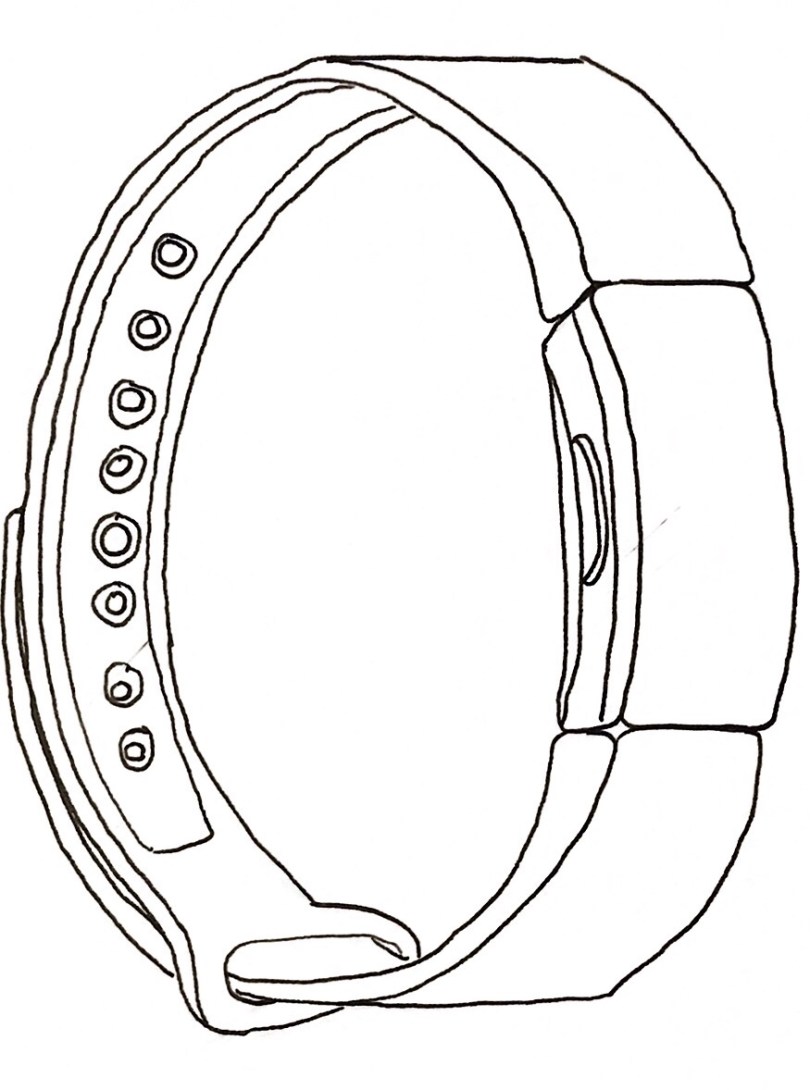
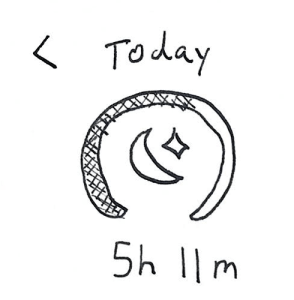
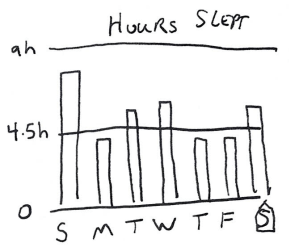
The Fitbit Inspire automatically tracks sleep with or without their nine dollar and ninety nine cent Fitbit premium subscription. The subscription model is very common in the wearable sector. It is a bracelet style watch, and it will display the hours slept from the prior night on the devices monochrome color touch sensitive display. For the Inspire (the first version, not the Inspire HR, two, or three which all measure heart rate) it has no specific sensors apart from an accelerometer by which to identify the sleep. It seems to take several minutes to trigger and it invariably counts the initial minutes as awake or restless. There’s probably some back dating going on as laying down at twenty two hundred hours on the dot it immediately clocked sleep as beginning at that time, not three minutes past the hour as one would expect if it did not begin tracking retroactively. It does not detect sleep if it’s removed and left perfectly still for a long period of time, so it distinguishes between being worn and detecting sleep by stillness as opposed to perfect stillness. If a period of time is spent laying in bed it will invariably count sleep as having begun too soon. Don’t go to bed with a book to read for an hour, or at least not with a Kindle where the motion to turn a page is confined to a button or touch. During sleep, and without a premium subscription, it does not register any different phases of sleep, such as light, deep, or REM, only awake, restless, or asleep. A premium subscription unlocks sleep stage tracking and an aggregate sleep score. The score is dependent on heart rate, and as the Inspire does not measure heart rate it is unclear if a score would be calculated. More than likely it would still provide a score but it would be based exclusively on periods of awake and restless versus actual sleep time. What counts as sleep as opposed to awake or restless is a black box. I wake up several times whenever I sleep. Out of habit I do my very best to remain in bed when it happens because if I get up history proves I’ll stay up. I am generally successful at falling back asleep, eventually. Only if I get up does it seem to register wakefulness as awake. Trip to the kitchen or bathroom? awake. Roll over and over five times in twenty minutes? restless. I had the thought that pressing the side button to wake the display and paging through the various datapoints it shows would cause it to register awake instead of restless. It did not, but that was probably an optimistic thought for a product that was seventy USD new in two thousand nineteen and twenty USD used today. It tracks sleep only as well as is necessary to tick that check box when competing against other devices, or that’s my impression of it’s depth at least. Battery life was at sixty percent after ninety six hours so a full week on a single charge may be expected. Charging is via a proprietary USB cord that has a three contact magnetic coupling on one end and a male USB A connector at the other. In the free iOS or Android application data for time asleep is presented in both a horizontal and vertical bar graph with days of the week on the one axis and seven days shown at one time. The vertical graph pretty exclusively shows hours slept. The horizontal graph presents the total time asleep and marks the bar with lines indicating restlessness and wakefulness. For any individual day there’s an additional chart with hours on the x axis with lines of various width denoting restless periods in blue and awake periods in red, it’s a zoomed in expression of the horizontal graph. Underneath, it breakers out the time asleep, time at which it’s clocking you as asleep and awake, and the total count of periods of both, and finally the total time not spent asleep. In the most annoying design decision possible it places the prior night of repose under the heading Today. Fortunately it does at least put that prior evening under the previous day’s day of the week. If it’s Tuesday, it will say you managed five hours of sleep Today, but it will put an M for Monday under those hours in it’s bar graph. A subscription may change how the data is presented, and it the depth of that data. It’s worth noting that Google owns Fitbit, which means a Fitbit Premium subscription is indirectly paying for Google, which is, frankly, something I’ll never choose to do. If they don’t earn enough showing me advertising to provide more in depth sleep tracking for free, that’s on them. As far as devices go this is certainly one of the cheapest options, provided buying used is on the table. It’s not likely to be something that gets fiddled with, just because it’s so simple. I’m sure the expectation is that it will be worn unless it’s charging. There’s little reason to do that though if one is only interested in sleep, and there’s few features other than step-counting that might justify it. It’s rather sleek, if unfashionable, and should fit under most sleeves if that’s any concern. Is this a tracker worth picking up? No. So why a review? I had one purchased during COVID as a means of incentivizing activity. Hit the Fitbit store if you have an interest.

Know what you do, when you’re asleep.

As the planet tilts on its axis and the angle of the orbited star becomes oblique, some people enjoy seasonal coffee. Others, in temperate zones, lay down with socks and shoes on lest they find themselves compelled to run out into the night to escape the fear. The cold can be bitter, and toes become increasingly dear as they are lost.

Sleep is important. Practically every biological function is subject to eventual disorder in the absence of sleep. The hale are enfeebled, the staid wax erratic, the rational grow deranged for the want of effective repose. Like and repost? However well a person is, they are certainly less so for want of sleep. For a long time disordered sleep, or even simply low quality sleep, was only ever testified to by the words of bedfellows or the bottom of yet another empty coffee cup. Anyone wanting a more complete accounting had to sleep (or attempt to) in a strange bed, trailing wires, watched over by the overnight technicians of a clinical practice. The medical setting is still the gold standard. More often, it’s excessive. If one needs to answer accurately the perennial practitioners posed question “how have you been sleeping?” a nightly average hours is enough. That’s sometimes harder than one may expect. It’s easy to over or under estimate one’s sleep particularly if at the moment one is feeling chipper (or like death at just above room temperature). And forget about obstructive sleep apnea or even just snoring, alone, unaided, it’s impossible to know. Enter the fitness tracker, the smartwatch. This is not about counting steps or calories, resisting water while plotting GPS coordinates and punctuating streaming services with notifications. Here, I’ll only be concerned with “sleep tracking” in whatever depth and breadth applies to the particular device. There will be no slick photos, no paid opinions, no ad copy. I’m no salesperson. Images where they’re of value will be simple, quickly executed line drawings. Every effort will be my own, motivated always by that terrible fear.

Now I lay me down to sleep, I certainly hope I manage to.

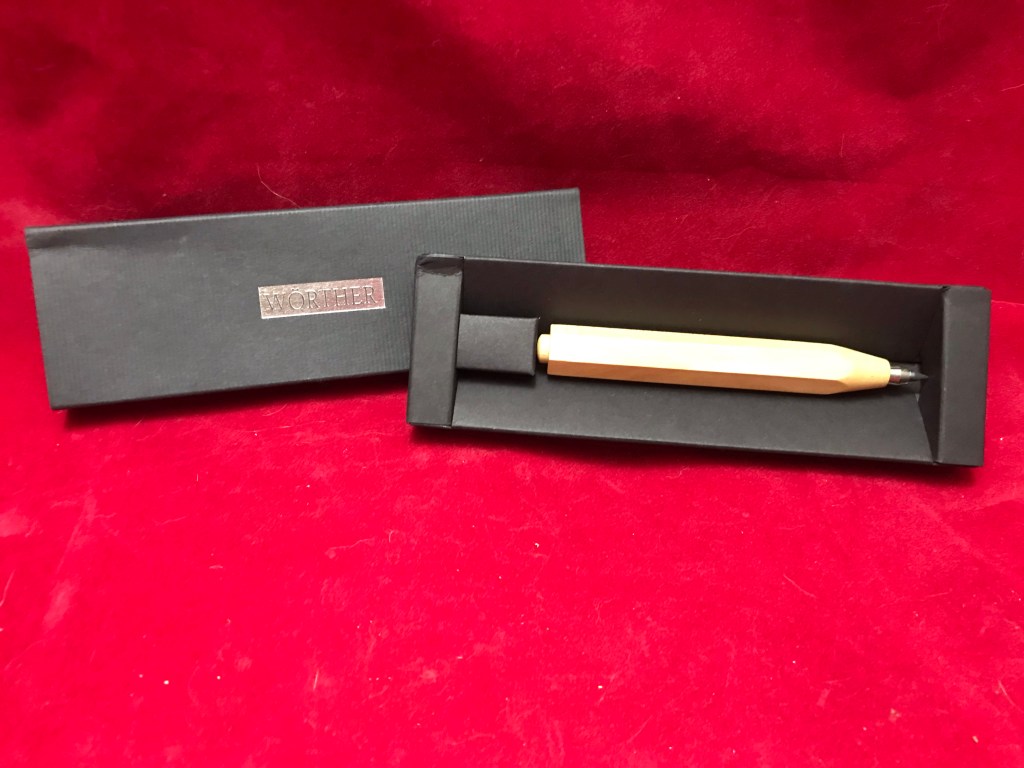
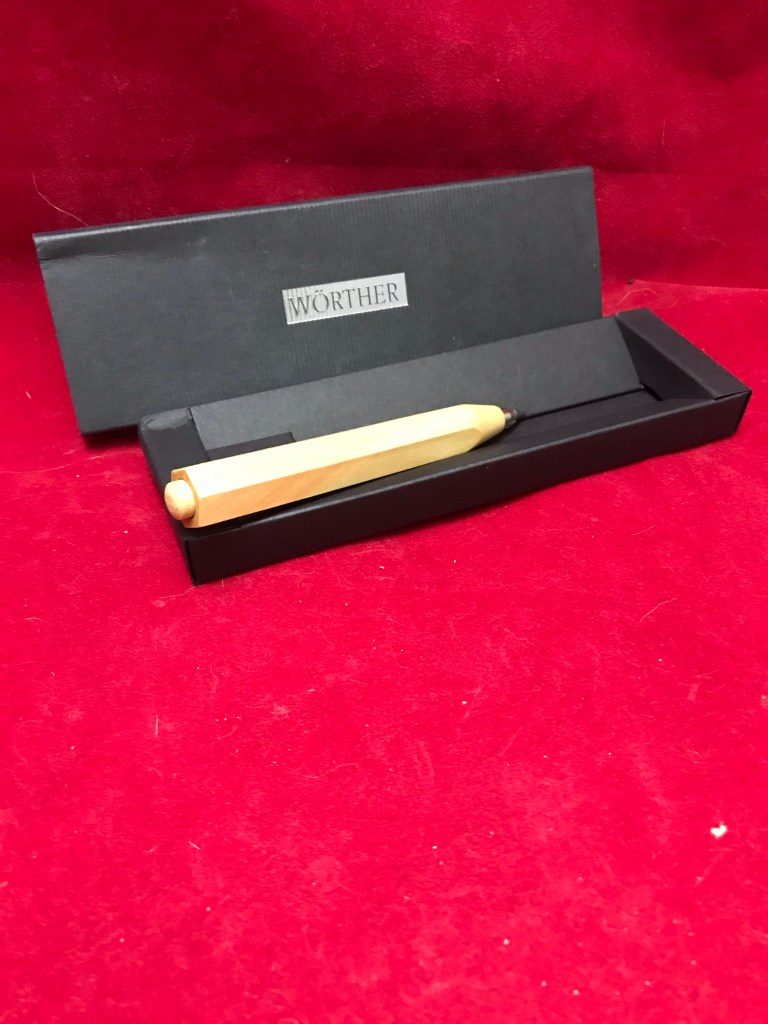
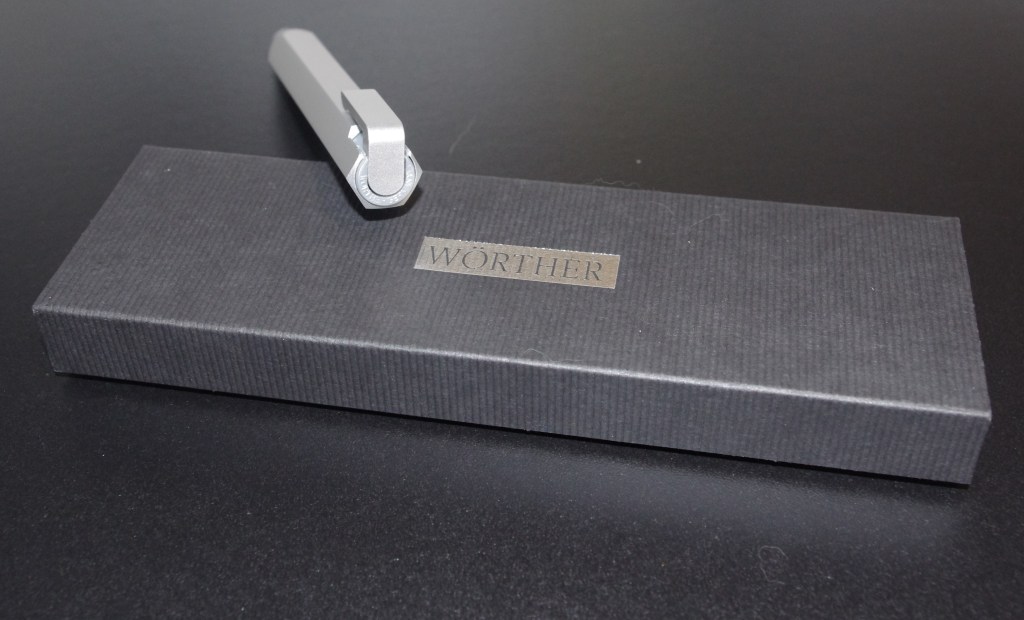
Wörther Hexagonal Wood Mechanical Pencil

Pictured Above & Reviewed Below

I picked up this pencil because I wanted the wooden Shorty 3000 to be much better than it was. One of the indictments against it I didn’t mention in that pencil’s review was something quite apparent visually. Between the wooden body and the metal clutch leaves was a plastic nose cone. The transition from body to cone was right where you’d try to hold it, and just sharp enough to be uncomfortable. Enter the Hexagonal, closer in appearance to the shorty, seemingly “all” wood, and lacking a clip.

I say closer to the Shorty, but that’s only if you judge the closeness by how it feels in hand. Compare the Shorty 3000 and the Hexagonal to the Shorty mechanically, looking only at the clutch release and it’s clearly a sport. Normally, I’d abhor the lack of a clip but the six facets are broad enough to stop any rolling. In fact, at it’s short length the absence of the clip helps it due to the practicality of rotating it in use.

A lead over two millimeters is a strange animal. Decimal leads need no pointing. The standard two millimeter technical pencil leads generally have a specialty pointer, as do the five and up leads. Around three, there’s nothing. One’s either burning up the sandpaper or cursing a blade. Unless you get through all the stages of grief to acceptance. Know you’re not going to have a sharp point, maintain the point you do have by rotating the pencil ever now and again. Without a clip bumping the hand it remains comfortable in all positions.

I like this pencil quite a lot. It’s alive to the touch, visually appealing, and practical. For $26 USD plus shipping I’d buy it again if it was lost or damaged. I do not expect it would be universally loved. One must be comfortable with a short instrument to find in it anything but novelty.

Available from: The Online Pen Co., Cult Pens,

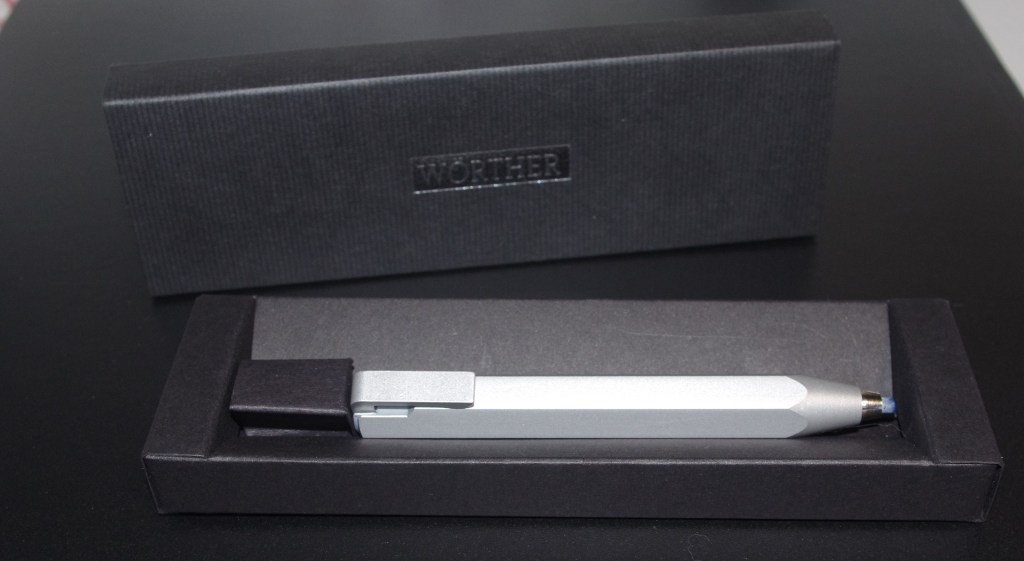
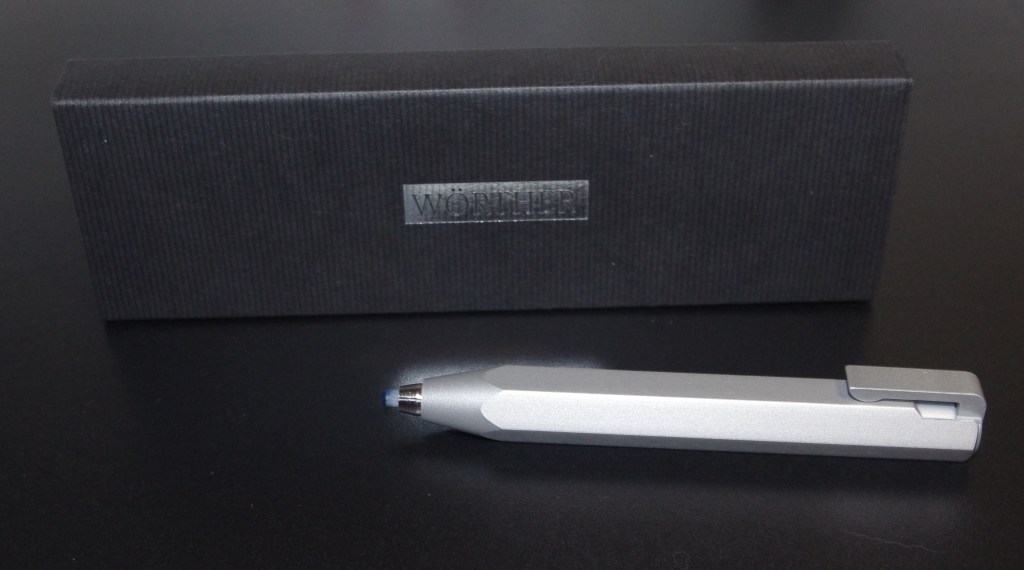
Wörther Shorty 3.15mm Natural Aluminum

Pictured Above & Reviewed Below

The main point I hold against my other Wörther pencil is it’s mostly plastic construction and the resulting exceedingly light weight. They offer the Shorty in all plastic in a rainbow of colors which I wrote off as certainly too light and all wood which I passed over for the same reason. In the pursuit of something more substantial I picked up the pencil in “Natural Aluminum.” Calling it that appears to be done to draw contrast with a polished, knurled, or brushed aluminum that’s common on writing instruments.

As with other variations of the Shorty the clutch is four segmented, the body is hexagonal in section, and the button depresses quite deeply. Unlike other variations the clip is hinged and smoothly pivots up from the body. It’s a small thing, but a nice touch, even if it’s unnecessary because the clip naturally stands off from the body a bit more than one may expect. That the clip is also aluminum, with the same finish as the body was the right design choice. The leaves of the clutch are a shiny steel, and there’s a small crescent of plastic on the button (embossed with the brand), based on which I expect Wörther could have easily gone with a steel or plastic clip; so their choice is appreciated.

It’s not a heavy pencil, but feels substantial, and for forty five dollars it’s not a pencil you’re going to buy for each color lead you plan on using (like you would with the seven dollar rainbow plastic models). It’s a pleasant pencil though, particularly if you like the Wörther leads and want to use those in a native pencil. It’s chunky and something about the natural finish makes it feel delicate in a way another metal wouldn’t. The six facets of the wide hexagonal body make it hard to hold comfortably in a non-standard grip. This could be good or bad depending on if you’re trying to break a bad habit or not.

If I lost it I would be sad, but I don’t think I would replace it. I could see buying another as a gift. I do not expect it would survive unscathed knocking about in a pencil box, it might not scratch as readily as I expect it may but the sharp lines where the facets come together seem only too delicate.

Available from: ipenstore.com Orange Art eBay.com

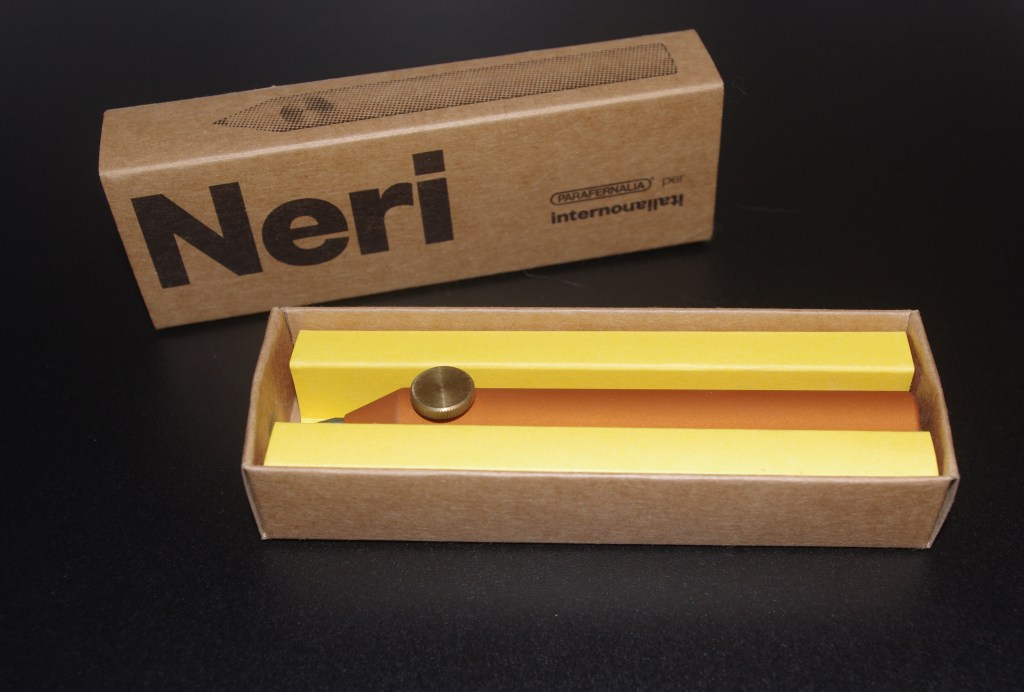
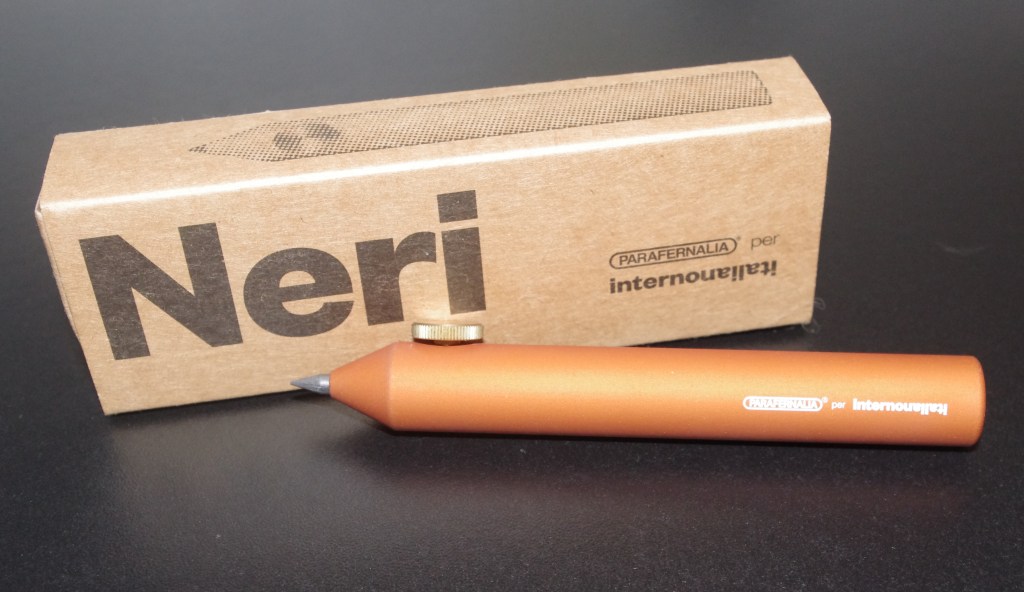
Parafernalia Neri S Lead Dispenser 3.2mm Orange

Pictured Above & Reviewed Below

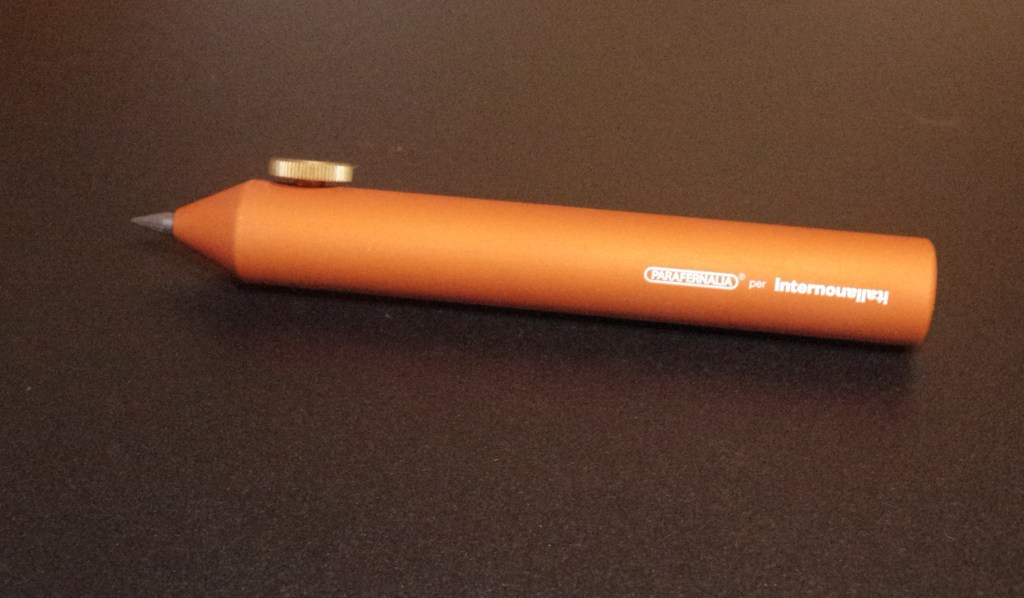
I like a short pencil, and this is one. It’s a bit unusual in that it’s neither a propelling nor a clutch pencil. If we’re giving it a description it’s a set screw pencil. There’s no complex moving parts, just a tube with a tapered end, a threaded hole and a thumb screw. That doesn’t seem like a whole lot to get for fifty six dollars. Parafernalia is a design focused Italian brand and the Neri pencil is manufactured by them for Internoitaliano who are another Italian brand that if anything is even more design focused.

Neri, is a whole lineup of pens and pencils although calling it a lineup may be a bit generous. It’s really just one design iterated into just enough variations to give a collection minded person something to buy multiple over and over. And what exactly would you be buying? An anodized aluminum tube with the most unpleasant texture of any material I have ever encountered.

The pencil looks good. That’s all you should ever do with it though, look. It’s not something that you can un-touch, which having touched it is the only thing I ever want from it. The texture could be described as broken fingernail, or fine sand eyedrops. It’s so excessively unpleasant that I’ve never marked a page with it. As I wrote above, it looks nice. The orange anodized finish is without flaw, and the printed branding is perfectly executed. The unique and profoundly simple design is reminiscent of one of those carefully laid out fonts where all you can see is the words unless you focus on the letters and start to pick up echos of everything that went into it.

I like it, I do. But I wouldn’t buy it again and if I could exist in a timeline where I never bought it and felt the too-fuzzy almost frothed aluminum finish on it I would.

Available from: No, I will not help anyone find this cursed object.

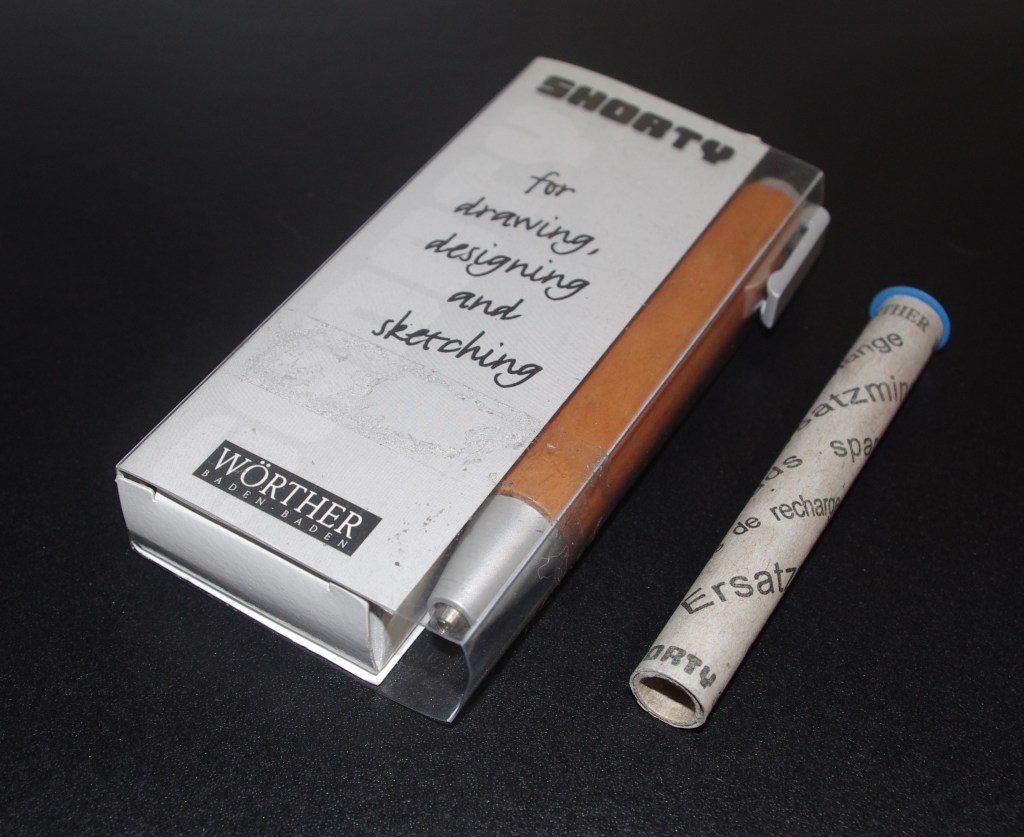
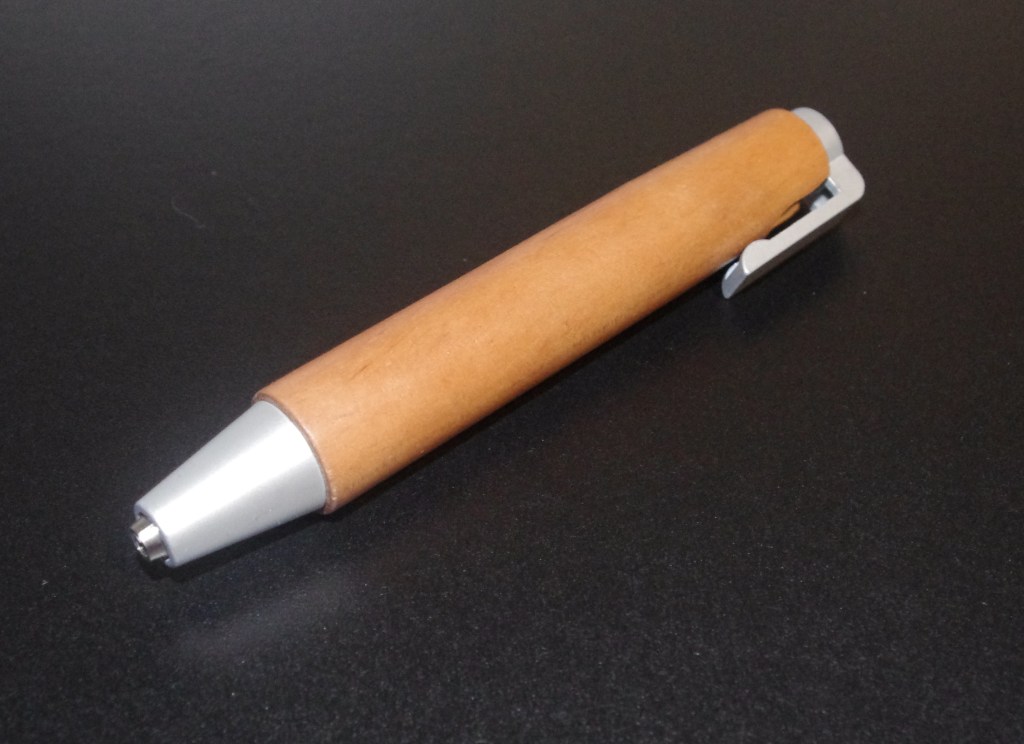
Wörther Shorty 3000 3.15mm Walnut

Pictured Above & Reviewed Below

Wörther is a German stationer, although that might imply more depth to the brand than is warranted. Near as I can tell they offer only 3.15mm short form clutch pencils and matching leads. Their pencil is called the Shorty and it’s generally hexagonal in section, which makes the round barreled Shorty 3000 someone of an outlier. It’s worth noting that if you want 3.15mm leads Wörther themselves is the only source. Fortunately, Koh-I-Noor offers 3.2mm leads which fit and 3mm would likely fit as well if it were possible to find without getting flooded with results for 0.3mm propelling pencil leads.

The leads Wörther offers are oil based, except for their graphite leads and although available in a range of colors come only in single tubes of four leads each for from two to seven dollars. This is potentially expensive (depending on the convenience of one retailer or another) for oil based leads as they wear so quickly. A benefit of the fast wearing leads is the lack of a need to point them. Because it’s so soft, and so much is consumed even in drawing a line of moderate length, one needs only to rotate the pencil to keep lines a constant width. Wörther goes so far as to make that point in the advertising copy. Emotionally, it comes across defensive as they frame it around their justification for not including a pointer. I suspect that except for the graphite leads a pointer or bladed sharpener would eat the oil based leads so rapidly that people would complain.

I may be wrong, but I think these are meant as marking pencils rather than writing or art pencils. Wörther touts them as able to write on glass, X-rays, wood, fabric, tile and virtually any surface. The wood finish Shorty 3000 looks wonderful, but in the hand feels exceptionally cheap. This is probably because apart from the thin wood body, the four segment clutch, and whatever spring is inside it’s made of plastic. And it’s rather lightweight plastic at that. I found mine used for sixteen dollars, including shipping.

I would not replace it if I lost it, or if worn out. I wouldn’t feel bad if upon loaning it to someone it wasn’t returned. I don’t mean for this to sound like any sort of indictment or criticism of the brand. They make a range with significant variety and I think this is just a cheaper model.

Available from: Orange Art

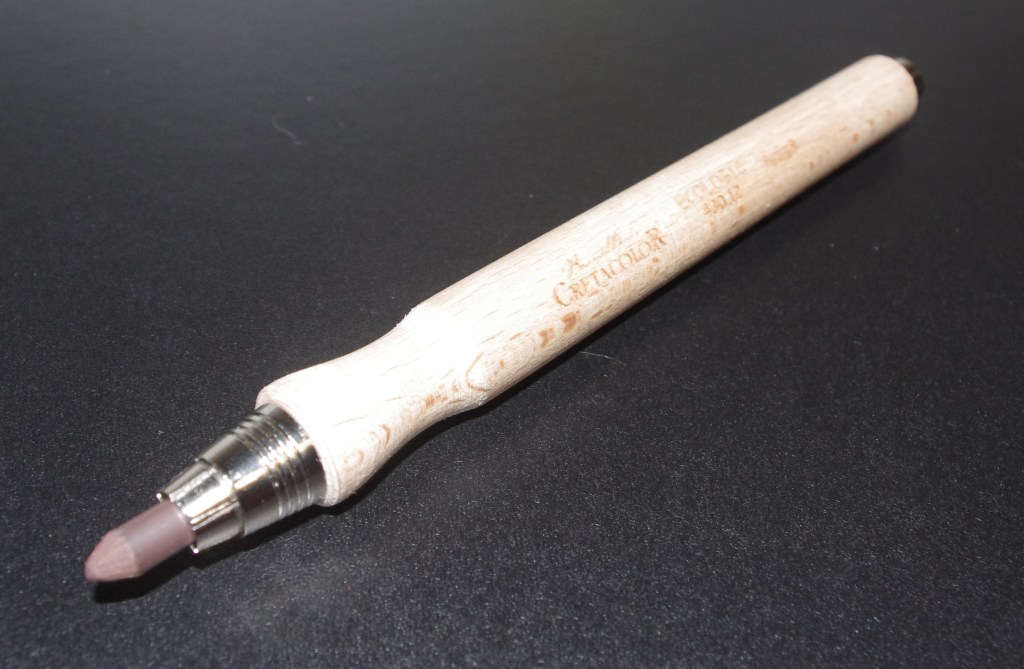
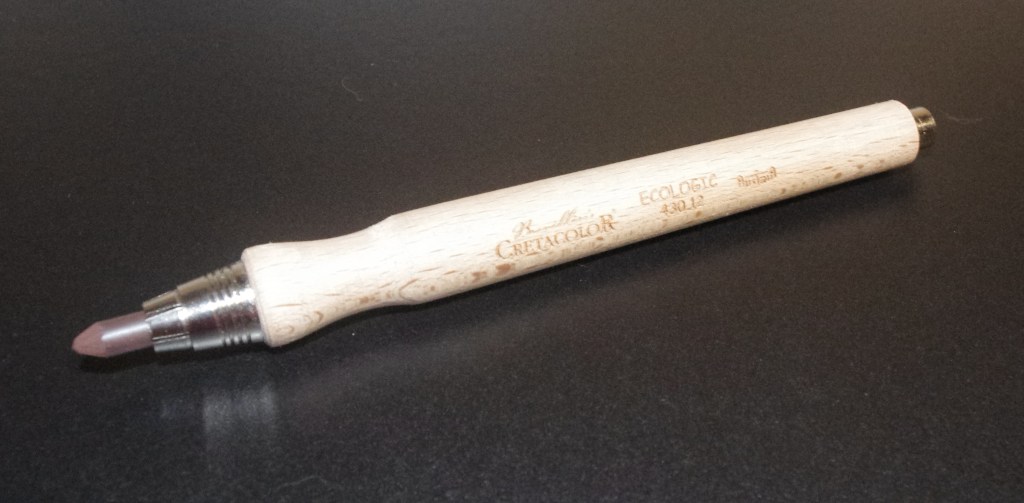
Cretacolor Ecologic 5.6mm Natural

Pictured Above & Reviewed Below

Cretacolor is the first brand listed here which is really an art materials company. The odds are good that if you’re the owner of a lead holder you’ve picked up leads from them at least once. The Ecologic is their purportedly environmentally friendly lead holder though they make a point of advertising it as suitable for charcoals. They would have to be processed charcoals, only the thinnest vine will fit. In consideration of fit, Cretacolor sells a wide variety of 5.6mm leads and they are longer than would fit in the two short-form holders reviewed above, but are the longest suitable for this holder.

The clutch mechanism is all metal of a uniformly reflective finish. It does not unscrew from the wooden body and it is unclear if it is glued or simply press-fit. I do not know the type of wood, but it feels like something common rather than some level-the-rainforest exotic. It’s sanded smooth but unsealed and not lacquered. It tapers somewhat towards the clutch release while the other end has a significant hour-glass grip. It’s not uncomfortable.

At retail the lead holder is from ten dollars to the high end of less than twenty dollars. This may feel expensive for the unfinished wood and common metal. The impression one gets is that it’s made to be inexpensive and more than that, it is made to feel plain. It’s the kind of lead holder one might be provided at an adult-education life drawing class. It will do the job but is not so appealing that it’s apt to walk out with a student. Neither is it so precious as to be upsetting if it does go missing.

If I lost it I wouldn’t buy it again. It feels as if it would last through four years of art school, provided it isn’t dropped. I don’t know if it’s justified or not, I do feel though, that upon impact with the floor from a moderate height the wood may crack and split. Perhaps it’s better to worry about how the wood is sure to discolor upon contact with smudged fingers or knocking around in a pencil box. On a glossy surface dust is expected to brush off, on this raw wood it’s sure to impregnate.

Available from: Cretacolor on Amazon.com Dick Blick Jacksons Art

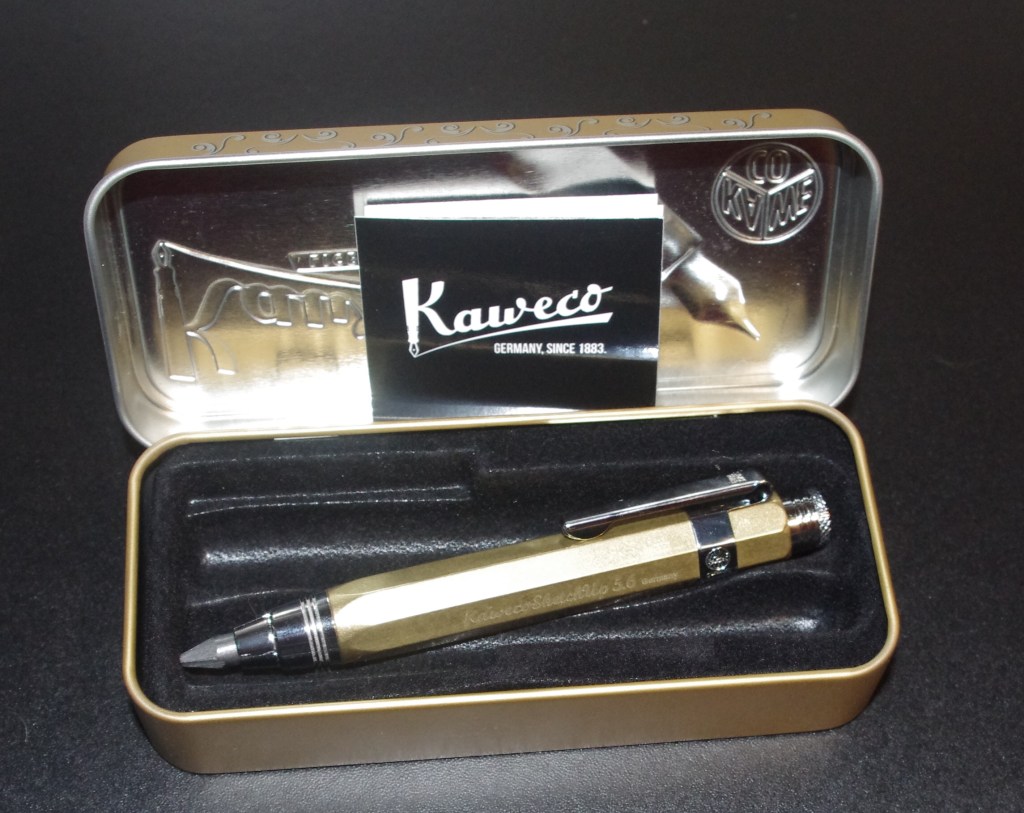
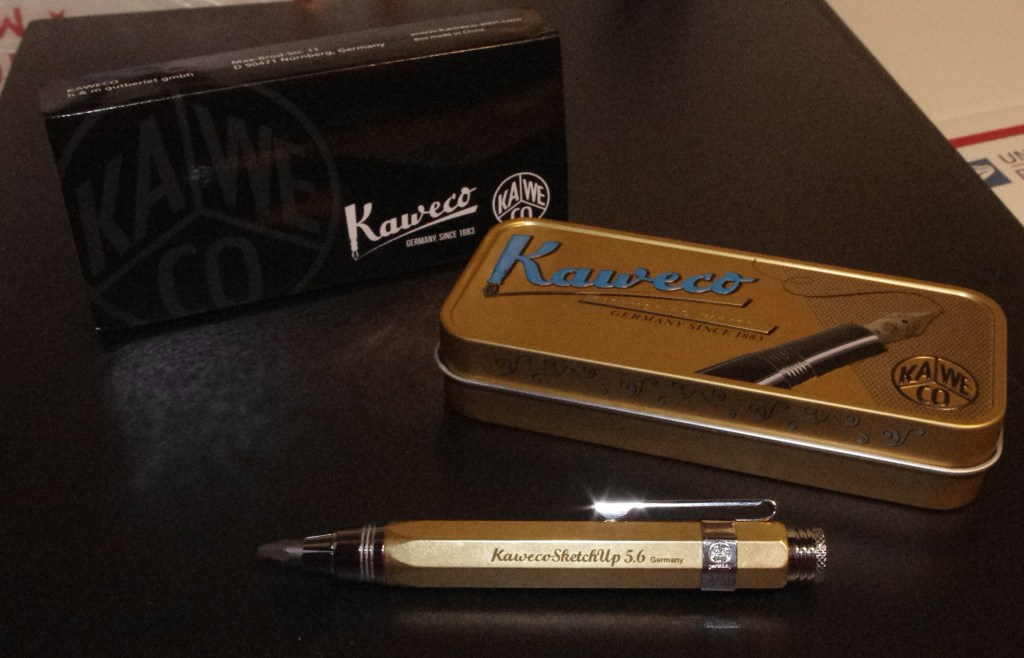
Kaweco Sketch Up Brass 5.6mm

Pictured Above & Reviewed Below

Kaweco is a German stationer with broad and deep coverage as far as their writing instruments go. For short form pencils they offer 5.6mm and 3.2mm clutch pencils and 0.5mm click propelled pencils. Materials for the 5.6mm versions are limited to one in brass, one in aluminum, and one in black plastic. It’s exceptional that they only offer the plastic one in black because they offer everything else in multiple colors. I selected the brass version because the idea that it would change appearance over time appealed. Mine is unlikely to acquire any sort of patina, because I’m not a fan.

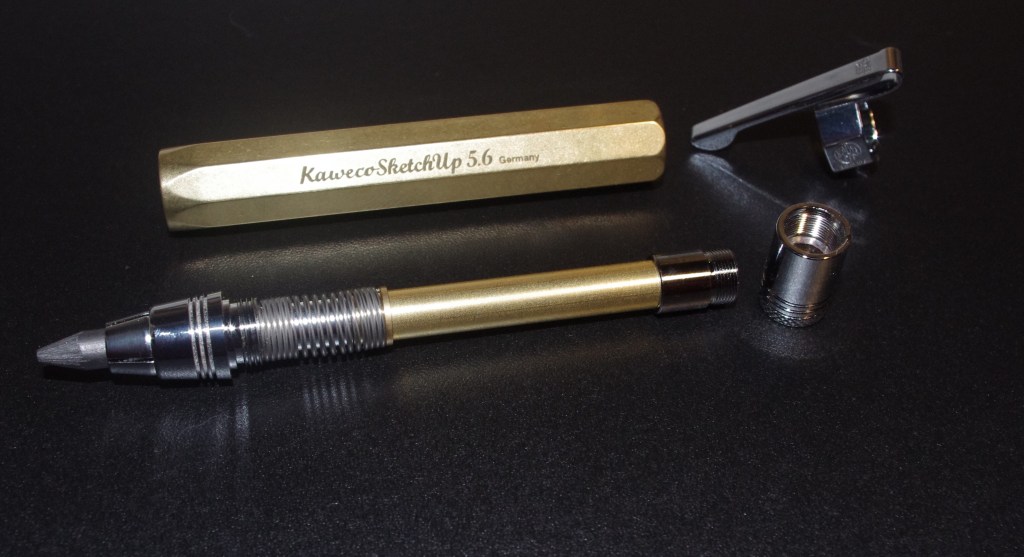
The pencil is heavy and doesn’t have a clip unless you bother to buy a slide on one from Kaweco. I could forgive this if the clip was more snug, as it is it slips and slides too much for any sense of security. For those who hate a clip I’m sure it’s welcome as an optional rather than built-in feature. For the octagonal body it’s mostly unnecessary as a roll-stop. Even if it doesn’t roll, it’s going to slide if you put it down in the wrong orientation on any sort of slope. This is a product of its slick finish and substantial weight. That weight is balanced and as a result how it is gripped governs the feel in use more than the design of it does. It’s unfortunate.

Depending on the retailer the brass finish Sketch Up will be in the general neighborhood of thirty dollars. In all honesty it’s overpriced, but this is due in some part to the decisions Kaweco makes regarding packaging. A cardboard sleeve around a stamped and painted tin is, excessive. As you might find in a draftsman’s 2mm lead holder the push button holds a lead pointer, and threading that as well as the mechanism and body certainly contributes to the cost of manufacture. Note, it’s an omnidirectional pointer, and not a bladed sharpener.

I wouldn’t purchase it again if I lost it and I don’t project that it would wear out within any individual lifetime. My expectation is this would be exactly what some other artist could be looking for. Why shouldn’t it be? Brand loyalty is a thing and it’s not ugly even if it is a brutalist Soviet apartment tower of a thing. Kaweco has a brass pocket style fountain pen and I could see an owner of the pen justifying the purchase of the pencil.

Available from: Amazon.com Jet Pens Kaweco and certainly other retailers.

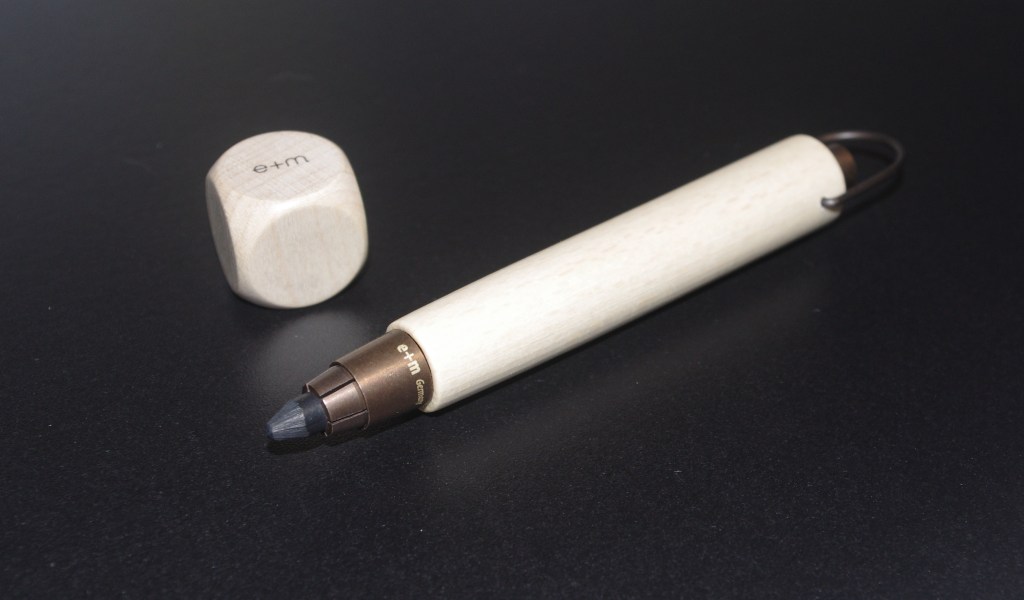
e+m Germany Clickman 5.6mm Beechwood

Pictured Above & Reviewed Below

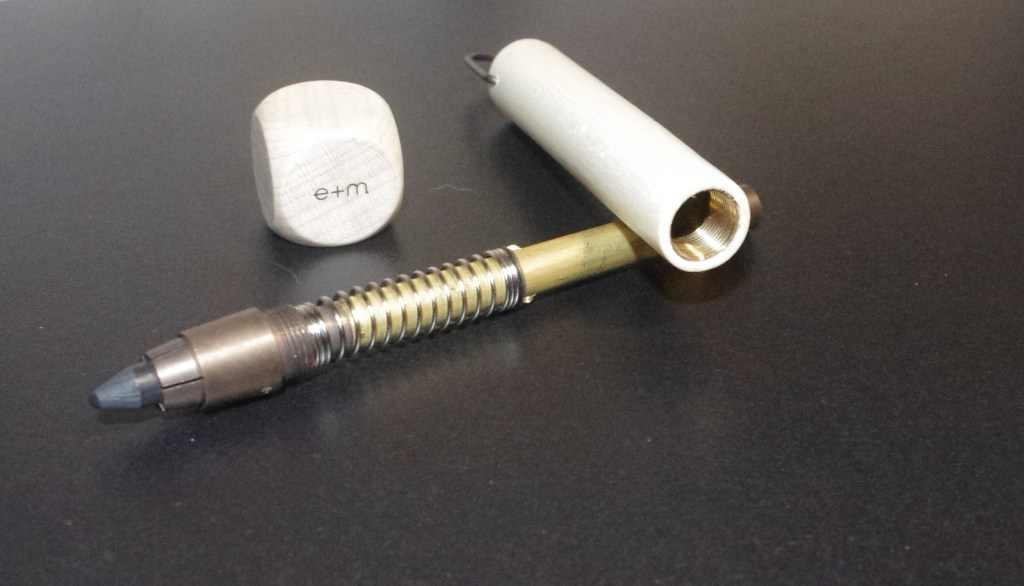
The brand “e+m” is a German stationer and every instance of their name I can find is in lowercase. They have been around longer than both k. d. lang and her inspiration, e. e. cummings, though I have to imagine they were not always averse to capitalization. Who knows, German isn’t bound by my native English conventions on capital letters. They make a variety of products, writing instruments and the usual affiliated objects. I have a pencil and lead pointer.

The Clickman by e+m in beechwood, is a short body, 5.5-5.6mm lead, push button clutch pencil. They also offer a ballpoint ink insert which transforms it into a pen. I selected it in beechwood because wood should look like it, and of the various models I noticed at the time none of them had anything that will stop them rolling (essential for a round body), save the Clickman, which has a lanyard horseshoe. It was pennies more than seventeen dollars. I will have to obtain a lanyard.

An all-metal mechanism of brass and steel with a brown (possibly anodized, both aluminum and titanium could be made that color) finish gives the pencil a reassuring weight. That weight is tip-heavy, rather than balanced, and it feels better for it. I don’t know if this was a purposeful design consideration, it seems like it would have to be, there’s no other reason to have the amount of mechanism beyond the six segment clutch sticking out from the body. The smooth finished wooden body has a metal inner tube with threads at the tip end. I don’t know if threading the metal and pressing or glueing it into a wooden cylinder is a cost saving measure; a hit to material cost certainly but threading wood consistently and cheaply feels like a tall order.

As far as the strength of the spring on the clutch goes it’s noticeably stiff. This is good, particularly for something in the 5.6mm diameter, as it means softer leads or even (thin) vine charcoal can be grasped by the clutch without slipping. There are, so far as I can tell, no corners cut. If I lost it I would buy it again. I cannot imagine that I will break it or wear it out to the point of inoperability. Somewhat oddly the photos I can find online from various retailers all show the brand emblazoned on the wooden body near the push button. On my example there is no marking on the wood, instead it is printed on the metal surround of the clutch mechanism.

There is no integrated lead pointer in the pencil. So for the cost of the pencil I purchased one from their available lineup. I consider it a point in their favor that a pointer is not integrated. The last thing one should have is a dust filled pointer screwed into their pencil. Searching reveals that e+m only offer wooden pointers (as distinct from a bladed sharpener) and those are available in a variety of stained and natural woods. There are two form factors, one bulb shaped and the other die shaped. The die shaped model is the objectively superior choice.

Pointing is an infrequent activity with a 5.6mm lead, or it should be. The only way to work small with such a wide lead is to keep it pointed, and that being wasteful, it’s best to work at A5 or larger. Starting with a point, turn the pencil frequently and it will yield a more or less consistent line until the cone is as much as half gone, when it should be re-pointed. That advice should be thrown out the window if you’re heavy handed or working with soft or oil-based leads.

Available from: Creative Art Materials on Amazon.com Cult Pens Jet Pens Hyatts and probably plenty of other retailers as well