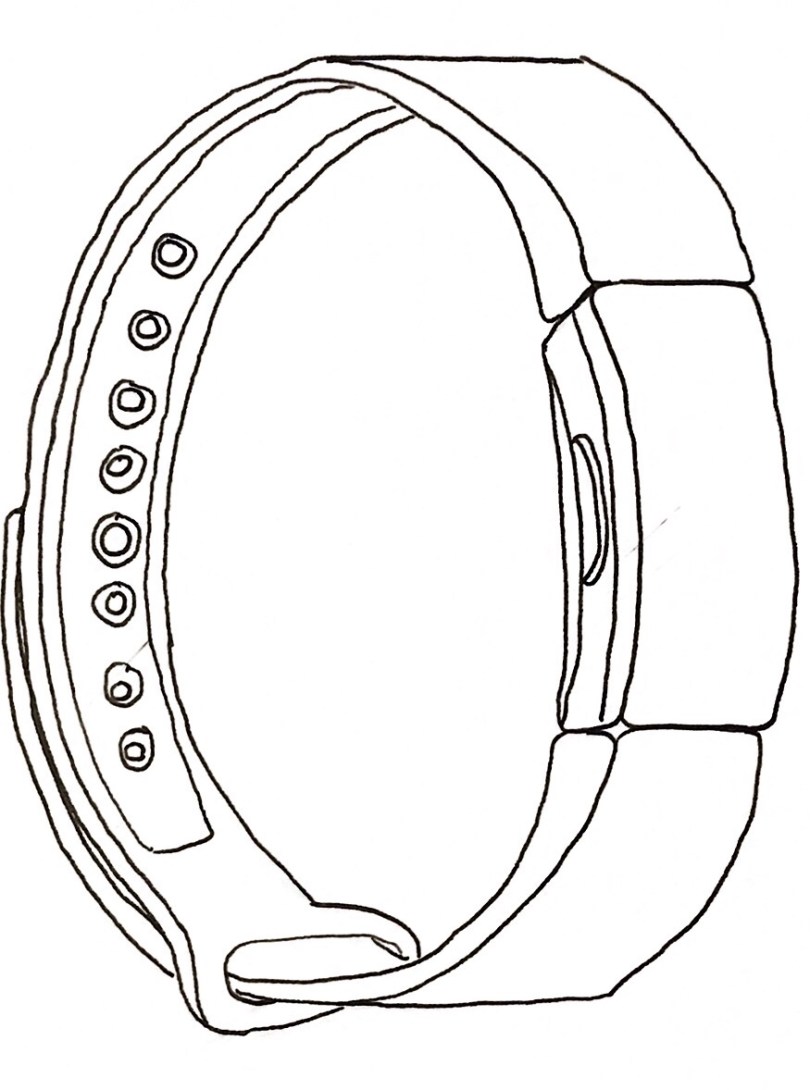
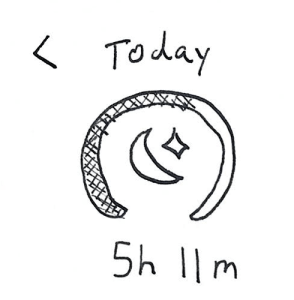
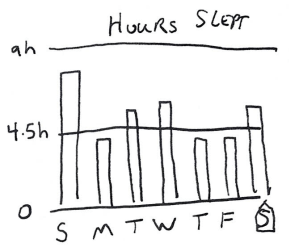
The Fitbit Inspire automatically tracks sleep with or without their nine dollar and ninety nine cent Fitbit premium subscription. The subscription model is very common in the wearable sector. It is a bracelet style watch, and it will display the hours slept from the prior night on the devices monochrome color touch sensitive display. For the Inspire (the first version, not the Inspire HR, two, or three which all measure heart rate) it has no specific sensors apart from an accelerometer by which to identify the sleep. It seems to take several minutes to trigger and it invariably counts the initial minutes as awake or restless. There’s probably some back dating going on as laying down at twenty two hundred hours on the dot it immediately clocked sleep as beginning at that time, not three minutes past the hour as one would expect if it did not begin tracking retroactively. It does not detect sleep if it’s removed and left perfectly still for a long period of time, so it distinguishes between being worn and detecting sleep by stillness as opposed to perfect stillness. If a period of time is spent laying in bed it will invariably count sleep as having begun too soon. Don’t go to bed with a book to read for an hour, or at least not with a Kindle where the motion to turn a page is confined to a button or touch. During sleep, and without a premium subscription, it does not register any different phases of sleep, such as light, deep, or REM, only awake, restless, or asleep. A premium subscription unlocks sleep stage tracking and an aggregate sleep score. The score is dependent on heart rate, and as the Inspire does not measure heart rate it is unclear if a score would be calculated. More than likely it would still provide a score but it would be based exclusively on periods of awake and restless versus actual sleep time. What counts as sleep as opposed to awake or restless is a black box. I wake up several times whenever I sleep. Out of habit I do my very best to remain in bed when it happens because if I get up history proves I’ll stay up. I am generally successful at falling back asleep, eventually. Only if I get up does it seem to register wakefulness as awake. Trip to the kitchen or bathroom? awake. Roll over and over five times in twenty minutes? restless. I had the thought that pressing the side button to wake the display and paging through the various datapoints it shows would cause it to register awake instead of restless. It did not, but that was probably an optimistic thought for a product that was seventy USD new in two thousand nineteen and twenty USD used today. It tracks sleep only as well as is necessary to tick that check box when competing against other devices, or that’s my impression of it’s depth at least. Battery life was at sixty percent after ninety six hours so a full week on a single charge may be expected. Charging is via a proprietary USB cord that has a three contact magnetic coupling on one end and a male USB A connector at the other. In the free iOS or Android application data for time asleep is presented in both a horizontal and vertical bar graph with days of the week on the one axis and seven days shown at one time. The vertical graph pretty exclusively shows hours slept. The horizontal graph presents the total time asleep and marks the bar with lines indicating restlessness and wakefulness. For any individual day there’s an additional chart with hours on the x axis with lines of various width denoting restless periods in blue and awake periods in red, it’s a zoomed in expression of the horizontal graph. Underneath, it breakers out the time asleep, time at which it’s clocking you as asleep and awake, and the total count of periods of both, and finally the total time not spent asleep. In the most annoying design decision possible it places the prior night of repose under the heading Today. Fortunately it does at least put that prior evening under the previous day’s day of the week. If it’s Tuesday, it will say you managed five hours of sleep Today, but it will put an M for Monday under those hours in it’s bar graph. A subscription may change how the data is presented, and it the depth of that data. It’s worth noting that Google owns Fitbit, which means a Fitbit Premium subscription is indirectly paying for Google, which is, frankly, something I’ll never choose to do. If they don’t earn enough showing me advertising to provide more in depth sleep tracking for free, that’s on them. As far as devices go this is certainly one of the cheapest options, provided buying used is on the table. It’s not likely to be something that gets fiddled with, just because it’s so simple. I’m sure the expectation is that it will be worn unless it’s charging. There’s little reason to do that though if one is only interested in sleep, and there’s few features other than step-counting that might justify it. It’s rather sleek, if unfashionable, and should fit under most sleeves if that’s any concern. Is this a tracker worth picking up? No. So why a review? I had one purchased during COVID as a means of incentivizing activity. Hit the Fitbit store if you have an interest.


 Uncredited Work