
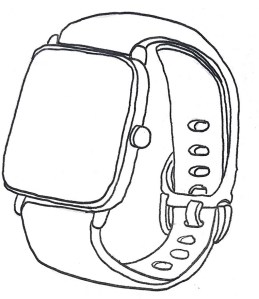
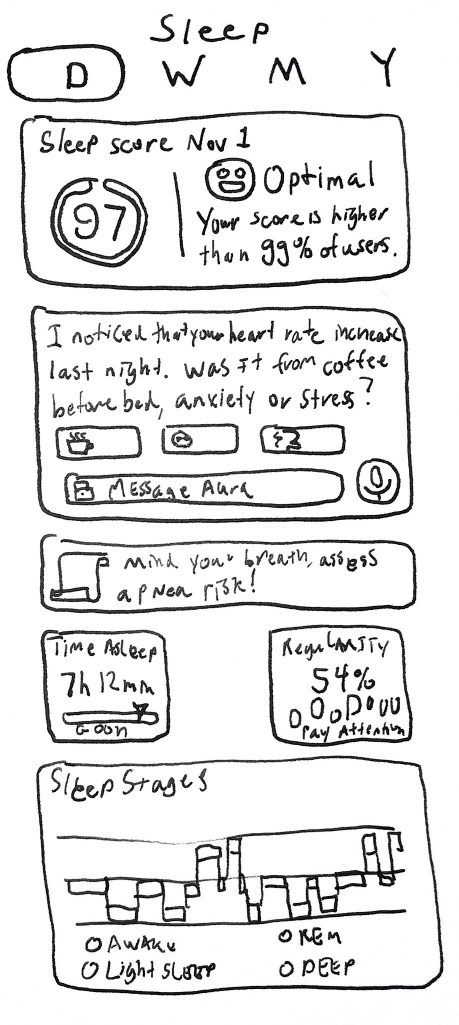
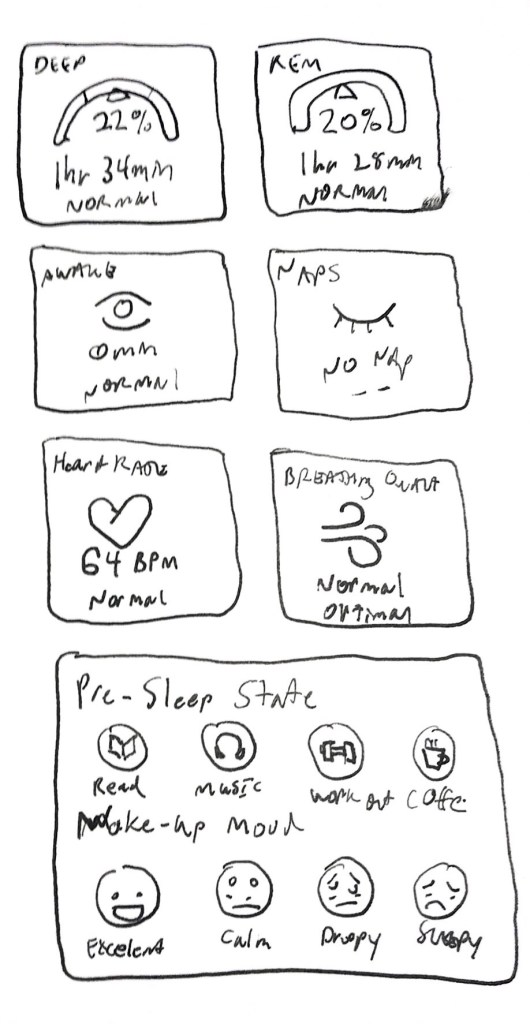
Everyone is forgiven for thinking a product named Amazfit is made by Amazon. Don’t think about it too much though because every Amazon device retains the complete un-massaged form of the name. It’s an Amazon Kindle Oasis, not an Amazbook. Amazfit is actually owned by a company named Zepp Health which explains the name of their devices iOS & Android app, Zepp. It’s noteworthy how hard they push Alexa in their ad copy anyway. Besides the Zepp app, I should note that the watch runs Zepp OS (version one, so a number of features found in version two are absent-more on that later), meaning you’re locked into their ecosystem as far as what is available on the device itself. That’s probably the reason they push the fact that there’s support for something as mainstream as Alexa. It looks like a slimmer, sleeker Apple Watch and it tracks sleep automatically. Supposedly that includes naps, although it didn’t pick it up when I laid down for an hour one afternoon. I had the same issue one night where I went to bed at sunset, slept for three hours, woke and had a bit of a run before laying back down a couple hours later around two. It did not include my second sleep, as a nap or otherwise. I wonder if that’s because I removed the watch to have a shower? Which is technically unnecessary, with it’s being waterproof and all, but what monster can stomach soap on a watch? Generally, it seems to detect sleep very well, reading before bed isn’t going to add an hour of sleep time, which is nice. This watch has an accelerometer, GPS, pulse oximeter, and microphone. Surely it has a microphone, how else would Alexa work? By using your phone? Alexa on the watch only works via Bluetooth tethering to a smartphone, but that does not include high jacking the phones microphone for audio commands to Alexa, those actually come from speaking into the watch. Given that relies on tethering it’s odd that it doesn’t have the option to use the phone to reply verbally, it responds in text on the watch face. Everything but the GPS likely comes into play for it’s sleep tracking, which is quite robust without a subscription to either their Zepp Aura Premium or Zepp Fitness Membership. For additional sleep tracking features the Aura subscription may be worth it. Priced at fifty USD per year, or just over four USD per month I’m seriously considering it though I expect I’ll hold off until I’ve tested additional devices. With a full color AMOLED touchscreen (there’s also a crown button that doesn’t turn like some more premium devices) display (it is a smartwatch after all) some sleep metrics can be viewed directly on the device. The sleep data is presented in two pages, with the first displaying total deep sleep time, sleep time, average nightly heart rate, and a sleep score. I rather like the score. All other sleep data, current and historic is only available in the app. Sleep has it’s own page in the app, with Home, Workout, and Profile being the others. Profile matters because that’s where various watch settings and preferences can be controlled, sensors turned on or off, that sort of thing. For sleep, there’s two specific toggles that may be turned on. First there’s assisted sleep monitoring which turns on or off automatic sleep tracking. Second there’s sleep breathing quality monitor that monitors breathing during sleep. It’s unclear if the way it monitors breathing is by pulse, oxygen saturation, movement, sound, or a combination of each. I expect it’s using all of them, just based on some of the information provided. Turning either of the sleep related settings on results in a warning that it will reduce battery life. It’s nice of them make the effort to be informative, but it’s also, like, duh. The advertised battery life is fifteen days. After ninety six hours battery life was at seventy percent. It’s nice to know one can spare a couple hours to charging one day each week and have no other concerns, even with all the default settings (pulse every ten minutes, auto brightness, raise to wake, display timeout at ten seconds) and the sleep and breathing monitors on. A final sleep adjacent feature which can be turned on is an intelligent alarm clock. It’s intelligent in the sense that it will alert based on sleep cycle at some point in the half hour leading up to the set time, or at the set time if it can not find an optimal sleep cycle in the prescribed half hour. The idea is that it less jarring than an indiscriminating alarm. The sleep page in the Zepp app is broken up first by period. I can’t speak to how normal my sleep stages are but it’s rare that I’m not awake already or in a light stage when the alarm time comes ‘round. The sleep data gets grouped as granular as day, and then steps back to show stats by week, month, and year. The year feels ambitious. Can a user be expected to carry on wearing the device for a year, or replacing it in the event of failure? If it’s found valuable enough, and it tries hard to be, it very well may. At the day level it provides a sleep score, and more interestingly provides some insight into where that falls among the ranks of their users; your score is higher than this or that percentage of our users. It’d be nice to know how many users that was. They then pitch a premium feature, a sleep health report including sleep apnea rush, insomnia, sleepiness, and restless leg syndrome. As I wrote above, I’m tempted. It does still call attention to various breathing concerns even without the subscription. Time asleep in hours and minutes is then shown and qualified (pay attention, good, and so on) and tapping it will show that data for the past seven days, a percent ranking among other users, and some condensed general knowledge regarding recommendations for duration. Next it shows the regularity of one’s sleep, how uniform the schedule is, and qualifies it. Then the prior week is graphed, as are the time to bed and the time up. Again it shows a short digest regarding the conventional wisdom on the topic. Next is a larger version of the sleep stages graph the watch presents. The graph is well arraigned in that with time on the x axis and stage on the y, one isn’t reliant on colors to differentiate the stages. Below that are cards for time and percentage of time spend in deep and REM sleep as well as awake and nap info. Each present the same week of history and relevant reading, as do the cards for heart rate and breathing quality. There’s also some presets to log pre-sleep state (read, music, phone, things like that) and emoticons to log one’s mood upon waking, a good habit to get into even if you’re not a monk. The weekly tab provides averages for the current week so far. I’ll note here that when a week is displayed it’s not a rolling seven days, it’s the week Monday through Sunday, not how I would chose to do it, but the days of history has to be broken up somehow. It’s not as nice as it could be, locking it to the Monday through Sunday period means a bad night early in the week can make the remaining days feel like a wash. What’s the point of trying to get a good nights sleep if you’ve already got two bad data points logged? The monthly tab steps back again and it’s graphs show data by week. Following that pattern the yearly tab breaks things down by month. What all these pages have in common is that they pair a users specific data, with percentage based assessments and information. The app might indicate that periods of deep sleep are on the low side, so it provides a card explaining what deep sleep is, why it’s important, and possible courses of action. Now, all of this is more of to do with the app, and not the device itself. About that, the Amazfit GTS four Mini is less a miniature GTS four, and more it’s own thing. For starters, it lacks a speaker like the GTS four, and a number of other features like audio playback or calling via Bluetooth. It’s also running a prior major release version of Zepp OS, one rather than two. This doesn’t really matter if sleep tracking is what’s desired. The major feature of Zepp OS two is Zepp Coach, without that it’s up to you to decide what your training days are and how intense any workout will be. That’s fine, personally I like the smaller size, it’s more proportional on my narrow wrist and with a smaller screen to support, and less features, battery life is better. I miss not having an audible alarm, but honestly, the vibration alarm is intense enough to be clearly audible as well. If you are interested in sleep, save a hundred USD and pick up the Amazfit GTS four Mini at ninety nine new and half that on the used market. If you want it to be a more robust gym-buddy spend more and get an Amazfit smartwatch that runs Zepp OS two. I also want to take a moment to say, Amazfit is a solid brand. If you aren’t looking for a Samsung, or an Apple device, it can be hard shopping in the smartwatch market. There’s a lot of brands out there that are cheap trash which make their money with a overpriced single sale of a device that’s made from the cheapest possible materials. They know they wont get return customers and base their business practices on that. Those companies aren’t building a brand, their selling the same device under half a different brands, that’s the only way they can get a return customer; fooling them into buying the same thing under a different name. That’s not Amazfit. Amazfit is a well-supported, functional, and quality option. Sure, Amazfit is not really competing with the six hundred USD and up devices. I do feel a brand new device from Amazfit is a better option that a four year old used device from one of the big two. Stop by the Amazfit US store, or hit one of their localized stores if you aren’t a fan of U.S. defaultism.
 Uncredited Work